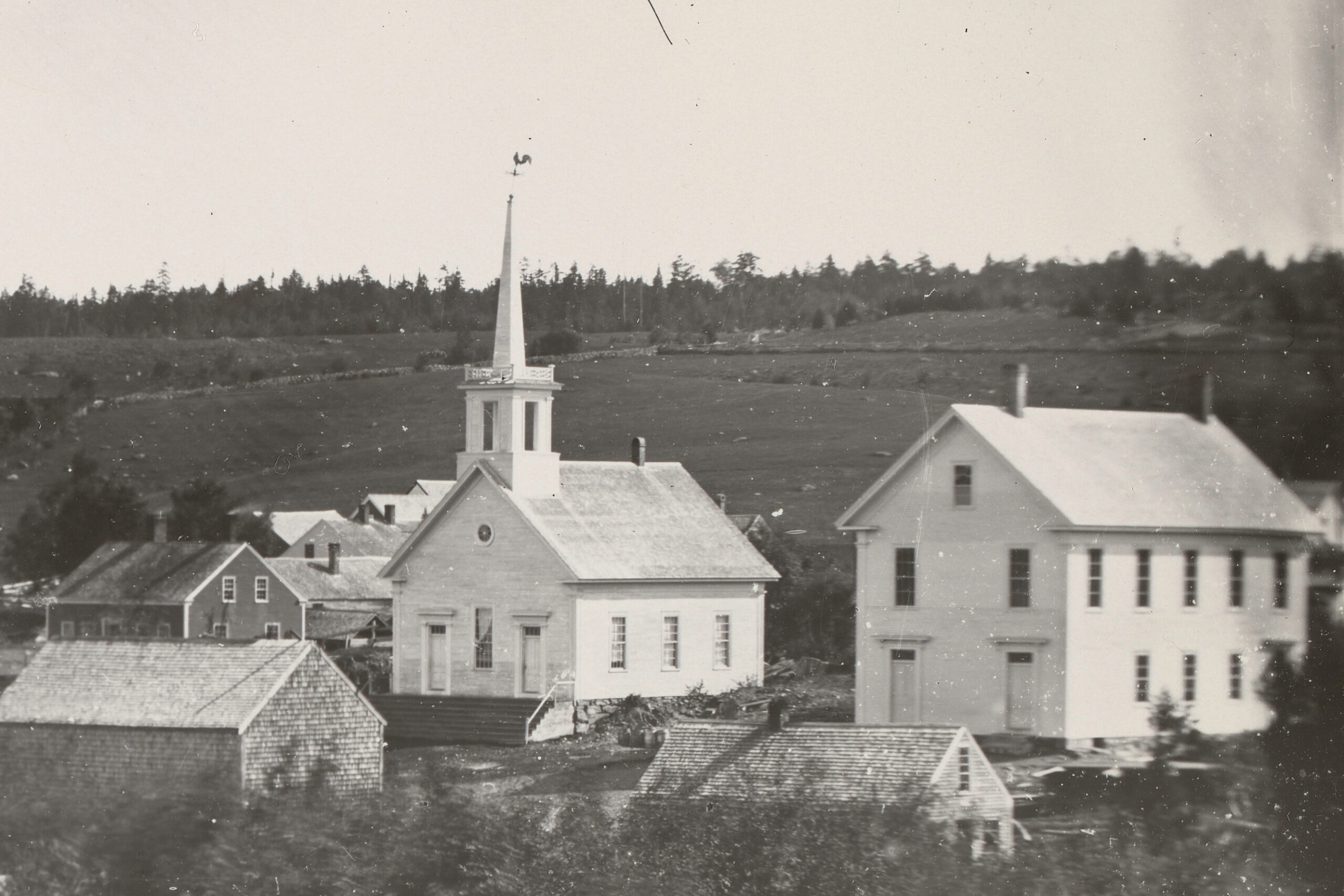
Faith, Fellowship & Civic Life: Greenville Village’s Gathering Places
Join us for our third annual Jane’s Walk as we explore the buildings and places that brought Greenville Village together — its churches, schools, fraternal halls, and public spaces — during the transformative decades spanning the late 1800s through the early 1900s.
This year’s walk carries special meaning. As the United States marks its 250th birthday in 2026, we’re reminded that the American story isn’t just written in capitals and courthouses — it’s written in places like Greenville Village, in the schools that educated our children, the churches where neighbors gathered in times of joy and grief, the fraternal halls where civic life took shape, and the fields where a community came together to play. The buildings and sites on this tour are Greenville’s contribution to that larger story.
We’ll begin at the Center for Moosehead History and work our way through the village. The Shaw Block on Pritham Avenue, built in 1893, anchored the commercial heart of town — its ground floor given over to commerce while the upper floors hosted lodge rooms for fraternal organizations, dances, celebrations, and school events. Nearby, the Odd Fellows Hall, built in 1915, served the community for nearly seven decades before closing in 1984 and being lost to fire in 2002. Throughout the village, the story of public education unfolds through several stops: the Greenville School on Moosehead Lake Road, one of the more modern schools of its day, opened in 1879 and doubled as the Town Office; the Prospect Street Primary School, built on land deeded by Milton Shaw in 1887 and operating until 1935; and the current Greenville High School on Pritham Avenue built by Louis Oakes. That site has educated Greenville’s young people through three successive buildings — the first built around 1902, lost to fire in 1912, its replacement serving students until 1935 when it was torn down to make way for the school that stands there today.
The walk also traces Greenville’s rich religious history. What began in 1859 as a meeting house serving multiple denominations eventually became the Greenville Union Church, which still stands on Moosehead Lake Road today. The Universalist Church on Lakeview Street has served the community in a different capacity for many years now as the Community House. Two Catholic parishes stood at different locations across the decades — one on Washington Street from 1904 to 1928, one on Pritham Avenue from 1927 to 2017 — and in 2018 a new Catholic church was built that continues to serve parishioners today.
And then there is Oliver’s Field — perhaps the most quietly moving stop on the tour. In 1911, Arthur and Rebecca Crafts donated this land to the Union League of Greenville in memory of their son Oliver, who loved baseball. For two decades it was a lively athletic field at the heart of community life. By the 1930s it fell quiet, and by 1976 it had become the home of senior citizen housing. It’s a small piece of ground with a lot of living in it.
Through these stops, you’ll come away with a richer sense of how Greenville’s residents built not just buildings, but institutions — and how those institutions, in their own quiet way, are part of the American story we’re celebrating this year
Location: Center for Moosehead History, 6 Lakeview Street, Greenville, Maine 04441. Street parking is available nearby. The walk will conclude back at the Center.
Estimated Duration and Length: 90 minutes. This is a 1.6-mile walk conducted primarily on sidewalks, with brief sections on paved roads.
What to Bring: Weather-appropriate clothing — the walk proceeds rain or shine, and early May in Greenville has a mind of its own. Comfortable walking shoes are a must.