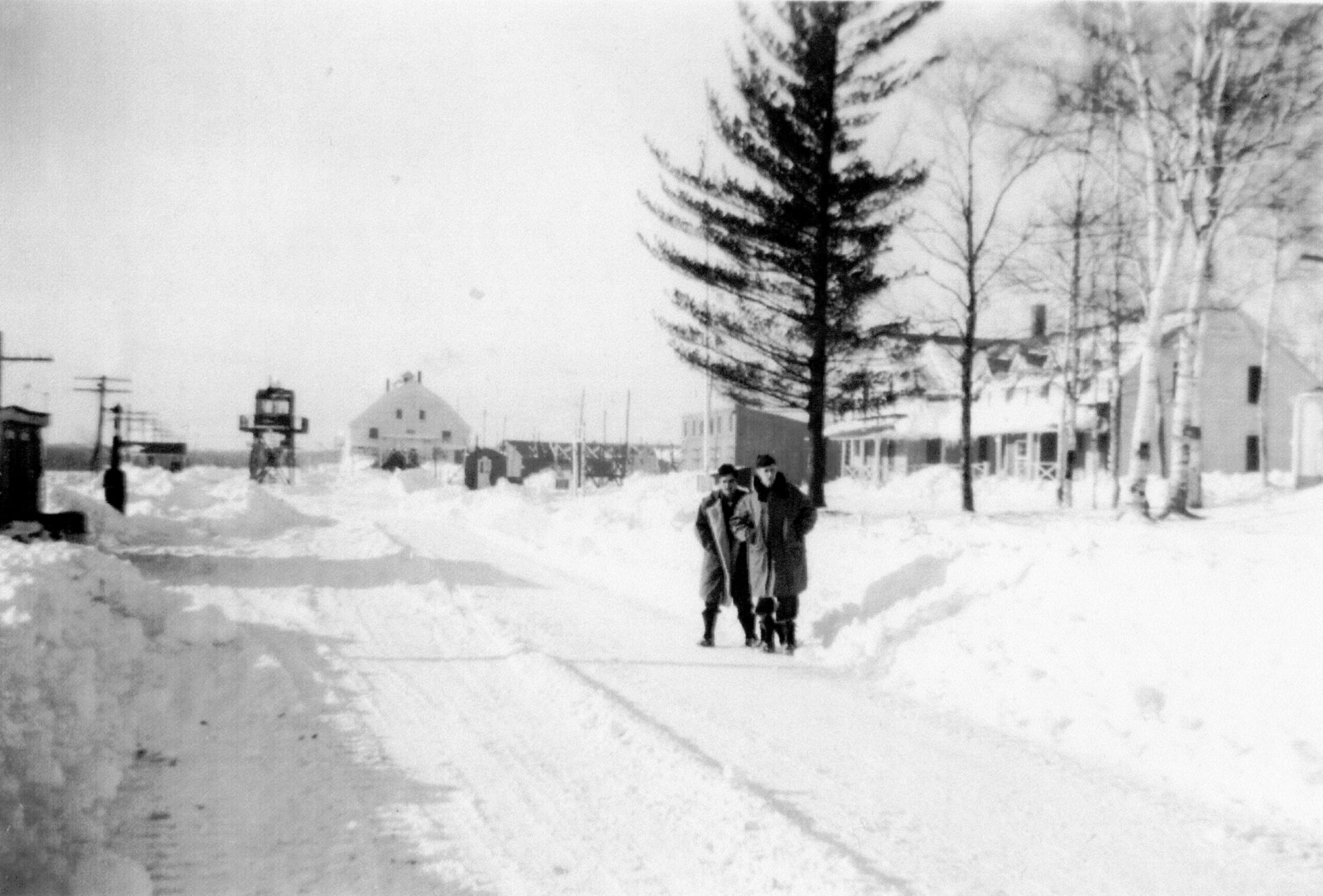
Most people around Moosehead know Seboomook — at the north end of the lake — as a place tied to logging and later camping. Few
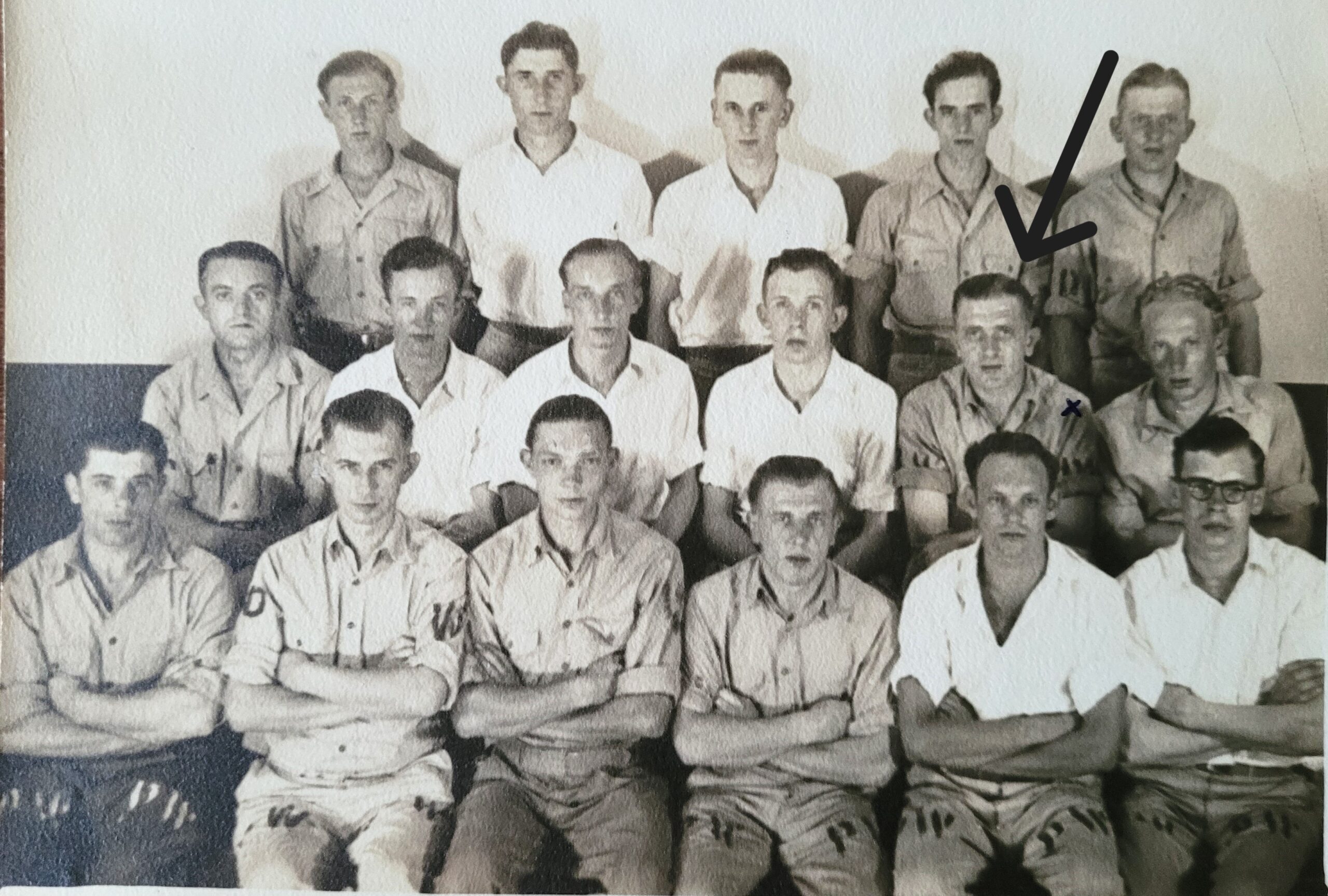
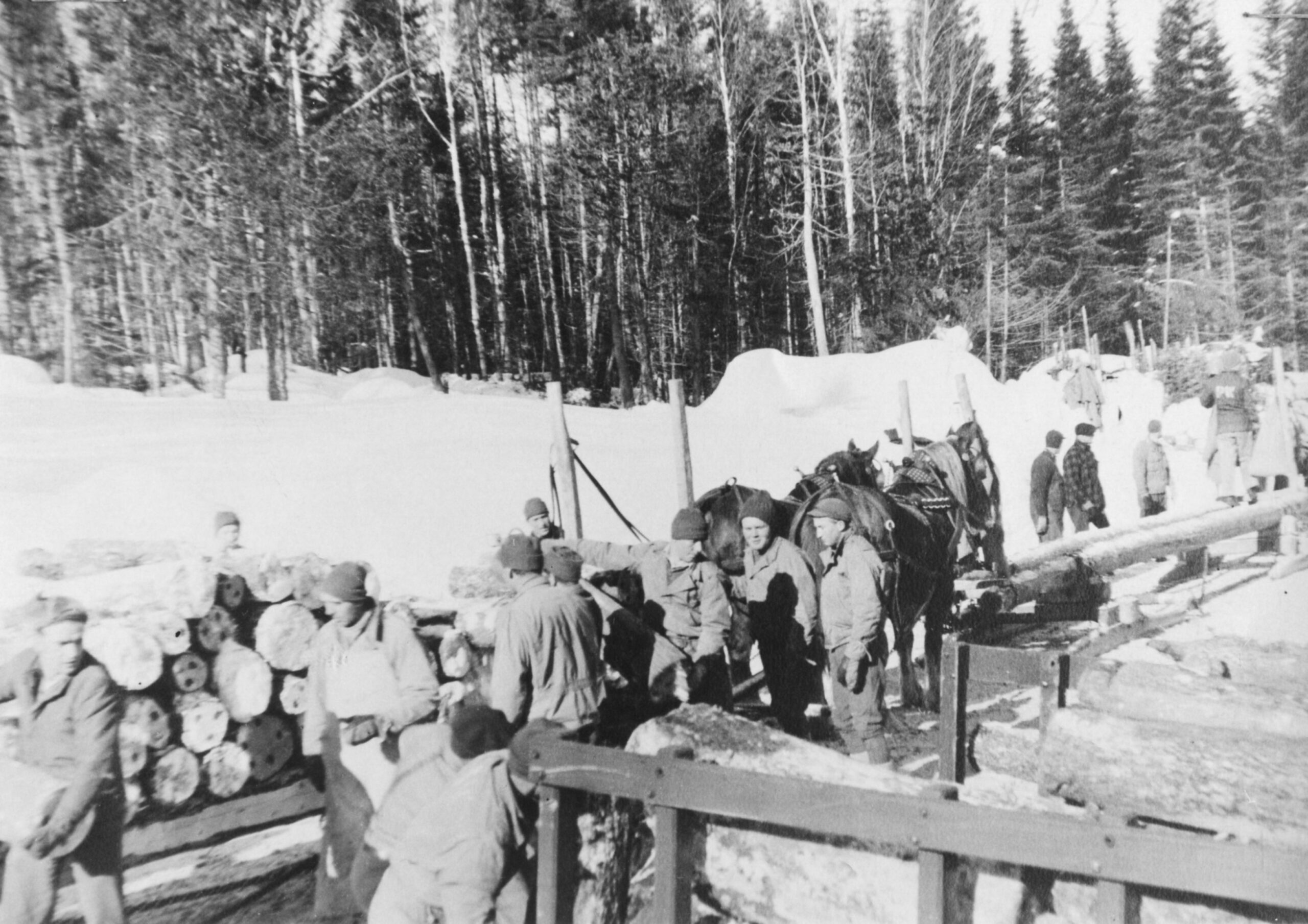
er know that during World War II, it was also the site of a prisoner of war camp. About 250 German soldiers were sent here to cut pulpwood when local men were away serving overseas.
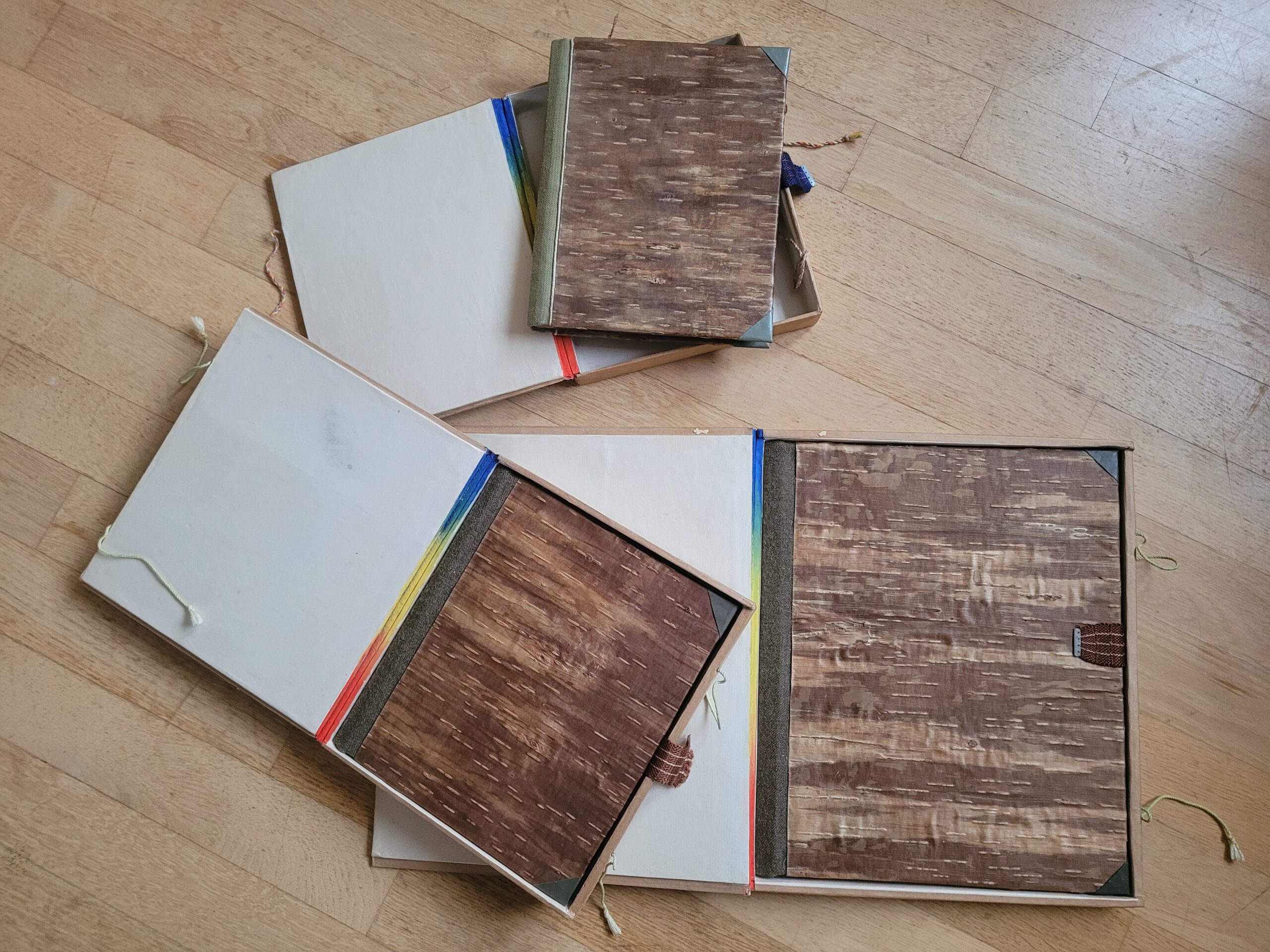
One of those men was Franz Josef Hogg, from Sankt Märgen in Germany’s Black Forest. He was nineteen when he was captured in North Africa in 1943. He spent two winters at Seboomook, working in the woods, living behind barbed wire, and finding small ways to hold onto dignity. In spare hours, he and others made books out of birch bark — carefully peeled, dried, and bound into volumes. These were sent home after the war through the Red Cross and treasured by families for decades.
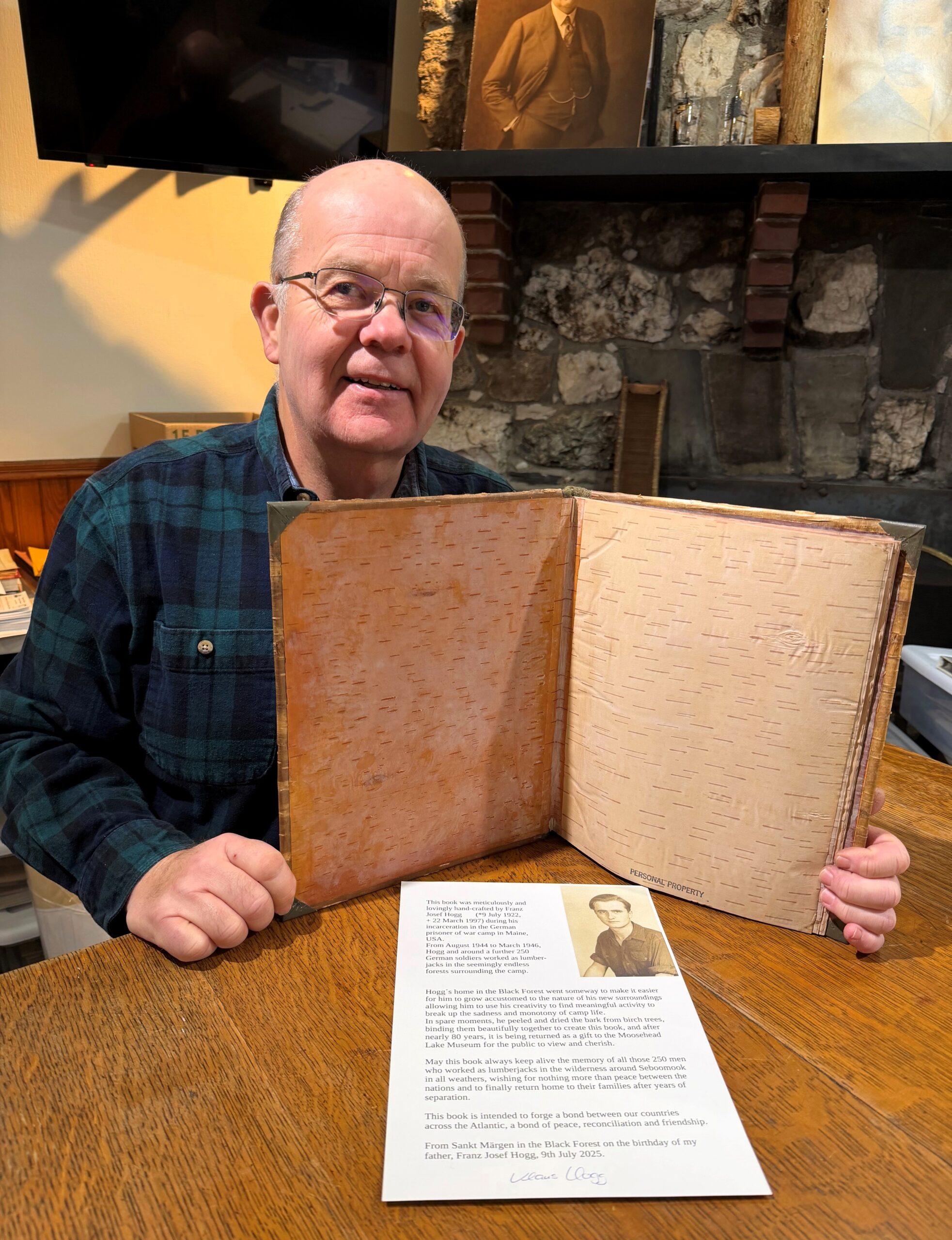
Late last year, Franz’s son Klaus reached out to me after reading about Seboomook in our Historical Society newsletter. He shared letters, photographs, and stories of his father’s time here. We have exchanged numerous cordial emails across the ocean, and this summer his family made a remarkable decision: they sent one of Franz’s original birch bark books to Greenville, as a gift to the Moosehead Historical Society and to the community.
That trust means a great deal. This isn’t just an artifact — it’s a family heirloom, passed across generations and now across the Atlantic, so that Moosehead’s story can be told more fully.
Life at Seboomook
Seboomook Farm, once a busy company farm for Great Northern Paper, was turned into a prisoner of war camp in 1944, surrounded by barbed wire and guard towers. Barns and farm buildings became living quarters, a mess hall, an infirmary, and places where men could gather.
Franz arrived at Seboomook in the summer of 1944, after time in a New Mexico camp. He and his fellow prisoners worked in crews of 25, cutting four-foot pulpwood with crosscut saws and axes. The quotas were demanding: each man was expected to cut a cord of wood a day. Winters were bitter. Franz later told his family, “The food was good but the work was hard and difficult. In winter there were often very unpleasant days when it was bitterly cold and we came back soaked.”
Even so, he remembered the lake and the forests with affection. The quiet beauty of Moosehead in winter stayed with him for the rest of his life.
The Birch Bark Books
In spare hours, some prisoners began a craft that still surprises people today: birch bark books. They peeled the bark, cut and dried the sheets, and bound them into volumes. The pages are thin and grain-marked. Some were inscribed with calligraphy in ink. The covers show patience and care.
Franz kept three of those books close for the rest of his life. His friend Willi Heufer taught calligraphy on those bark pages and even submitted a design for the camp newspaper. These details remind us that the camp held men who were trying to stay human while the world moved them like pieces on a board.
A Family’s Gift
Franz lived at Seboomook until March 1946, then was sent to England for agricultural work — still in captivity during this time — before returning home in 1947. He reunited with his parents and siblings, though he never saw his younger brother Hermann again; Hermann died in France in 1944. Franz settled back in Sankt Märgen, where he died in 1997.
This summer, his son Klaus wrote to me again. His letter was plainspoken and moving: the family had decided to gift one of Franz’s original birch bark books to the Moosehead Historical Society. “We would be very happy if the book is made available to the public and not to be left to gather dust in a depot,” he wrote. “We hope that the book will keep the memory of the former POW Camp in Seboomook alive and at the same time serve as a reminder for a peaceful future.”
The book arrived safely. It’s a quiet thing to hold, but it hums with old effort — the careful cutting, the binding, the practiced lines of ink. Fragile, strong. You can feel what it stood for: a claim to dignity, a way to carve out meaning when life had narrowed, and a bridge back to family across an ocean.
Carrying the Story Forward
By 1950, Seboomook’s camp buildings were torn down or moved. Today, folks pitch tents and light campfires where prisoners once returned, soaked and cold, from the woods. Most don’t know the history beneath their feet. That’s not a criticism — it’s just how land works. It keeps its own counsel until someone asks.
Klaus asked. His family answered. And in doing so, they’ve added a layer of meaning to a place many of us think we know well.
The birch bark book is not just an artifact; it’s a reminder that history is never only dates and names. It’s people making do, choosing decency, crafting something beautiful with what’s at hand.
A Plain Christmas Message
At Christmas we talk about gifts, but often we mean things wrapped in paper. The better gifts are the ones that carry memory and hope. This book from a family in the Black Forest of Germany is one of those gifts.
It speaks to the humanity of men who worked hard in cold woods, who decorated an altar set up in the camp dining room, flanked by Christmas trees, to mark the season, and who found ways to be themselves even when life had narrowed to fences and quotas.
It also asks something of us: to keep stories alive, to honor both the woodcutters and the family who carried their memory forward, and to remember that Moosehead Lake’s history doesn’t sit apart from the world’s history — it intersects it.
So, as you gather this season — around tables, stoves, and fires — think of the men at Seboomook who made a place of prayer and crafted books from bark. Think of Franz’s simple truth: the work was hard; the winters were bitter; and yet the land was beautiful.
The birch bark book rests in our care now. Not to be put away, but to be shared. A gift across generations, across an ocean, and across time. Proof that even in the cold, someone was making something worth saving. Proof that light can be found and passed along.
Looking Ahead
Next year, the Moosehead Historical Society plans to create a display about the Seboomook POW camp and the birch bark book, so that this story can be shared more widely with the community and visitors.
From all of us at the Moosehead Historical Society, we wish you a Merry Christmas and a Happy New Year. May the season bring peace, memory, and hope.