Greenville’s Masonic Temple: Lost to Fire
On December 15, 2025, Greenville lost one of its most enduring landmarks when fire destroyed the Masonic Temple on Pritham Avenue, home to Columbia‑Doric Lodge No. 149. For nearly a century, the temple stood as a symbol of generosity, fellowship, and civic pride, rooted in a tradition that began in the Moosehead region in 1869 with the chartering of Doric Lodge in Monson. Twenty‑five years later, Columbia Lodge was formed in Greenville, meeting in rooms provided by the Shaw family in the newly built Shaw Block. Drawing members from Monson, Greenville, Shirley, Willimantic, and Blanchard, the lodge quickly became a vibrant part of town life.
Arthur A. Crafts’ Vision
The dream on a permanent home was realized in 1929 through the generosity of Arthur A. Crafts, a prominent Greenville businessman, civic leader, and former state senator. On June 21 of that year—his 61st birthday—Crafts presented Columbia Lodge with a new temple. Valued at $75,000, it was one of the most extraordinary gifts ever made to a lodge in Maine, and perhaps the first time in the state’s history that a member had presented an entire temple to his brothers.
Crafts explained his motivation simply: “Greenville citizens have honored me in public life and supported me in my business enterprises. I have dreamed a dream of what I would like to do to express to all my appreciation of their friendship and honors… I decided that it should be my lodge which would share with me the fruits of my success.”
A Landmark of Design
The temple was situated on a five‑acre site stretching from West Street (now Pritham Avenue) to the shore of Moosehead Lake. The land, first held by John Eveleth—Arthur Crafts’ father‑in‑law—had been in the family since the early days of Greenville becoming a town. Passed down through generations, it became part of the lodge’s story when Arthur and Rebecca Crafts chose it as the site for the temple. Its location halfway between Greenville Village and Greenville Junction gave it prominence, while its setting among groves of trees offered beauty and quiet dignity.
The building itself was two‑and‑a‑half stories, measuring 40 by 70 feet, constructed of Ohio brown brick trimmed with yellow face brick. The façade was symmetrical, with pilasters and cream‑colored pillars harmonizing against the dark red brick. Above the entrance, the square and compasses were set in stone, a permanent emblem of the order. The roof was covered in slate quarried in Monson, donated by fellow Masons John Coleman and Silas Adams, ensuring durability for generations.
Inside, the temple was finished throughout in solid oak. Candle‑style lighting in warm gold tones cast a dignified glow. Even the doorknobs were custom‑made, bearing the square and compasses. Every detail was chosen to embody permanence, dignity, and craftsmanship.
The daylight basement contained a banquet hall with seating for 180, a modern kitchen equipped with electric appliances, and a boiler room surrounded by firewalls. The heating system included an oil furnace with thermostatic controls, a hot water heater, and even a gasoline auxiliary heater—state‑of‑the‑art for its time. The street floor offered club rooms for billiards and cards, a smoking room, and a reception parlor furnished in wicker. Dressing rooms and restrooms for men and women were also provided.
The top floor held the lodge room, described as one of the finest in New England, if not the entire country. It was adorned with a rug donated by Mrs. Crafts, regalia rooms, preparation rooms, and smoking rooms. The lodge room itself was finished in red, white, and blue, a patriotic touch that reflected both Masonic tradition and national pride.
Dedication Day
The dedication of the temple on June 21, 1929 was a civic event of rare scale for Greenville. More than 400 people attended, including representatives of the Grand Lodge of Maine, Governor William Tudor Gardiner, former Governor Ralph Brewster, and other dignitaries. The Greenville Marine Band played, Boy Scouts assisted with parking, and the Order of the Eastern Star presented Crafts with 61 American Beauty roses in honor of his birthday. A birthday cake shaped like the temple itself, crowned with 61 candles, was rolled in to surprise the donor.
Governor Gardiner praised the temple as “an outstanding building that will bring opportunity for a broader life to both the young and older men of your community.” Others declared that Crafts’ gift was “one better than King Solomon’s,” a monument to vision and devotion. The day concluded with a grand reception and dancing, music by Hammond’s orchestra, and a receiving line of local leaders and Masonic officers. It was remembered as one of the most brilliant social occasions ever held in Greenville.
A Community Gathering Place and Continuity
Though built for Masonic fellowship, the temple quickly became part of Greenville’s civic life. Public breakfasts and dinners were held there, and in recent years funeral services offered families a place of dignity and remembrance. The temple also became the setting for a pivotal moment in 1970, when fire destroyed Doric Lodge’s building in Monson. Columbia and Doric Lodges consolidated to form Columbia‑Doric Lodge No. 149, with the ceremony held in Greenville’s temple. That union ensured both communities retained their identity and that the bonds of brotherhood endured. For the next half‑century, the temple continued to serve as a home for fellowship and community events, strengthening its role as both a fraternal and civic gathering place.
Legacy and Stewardship
For nearly a century, the temple stood as a reminder of Arthur Crafts’ generosity and of the values of Freemasonry—friendship, service, and continuity across generations. Its destruction during the early hours of December 15 is a profound loss, but its story remains. The building was more than brick and slate; it was a civic monument, a gathering place, and a symbol of generosity and vision that shaped Greenville’s history.
The Moosehead Historical Society is committed to preserving this story and honoring the temple’s place in Greenville’s heritage. As part of that work, we invite brethren and families to bring forward artifacts associated with the lodge—programs, aprons, pins, regalia, photographs, or keepsakes. Each piece, no matter how small, helps ensure that the memory of Columbia‑Doric Lodge continues to shine and that future generations will understand what it meant to those who gathered there.
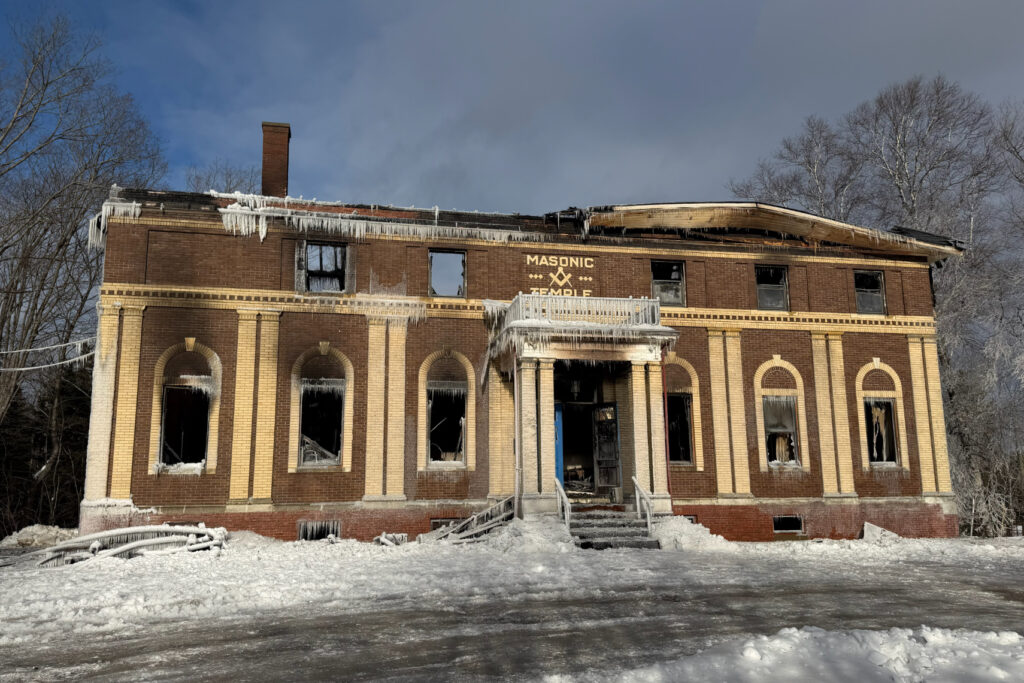
December 15, 2026
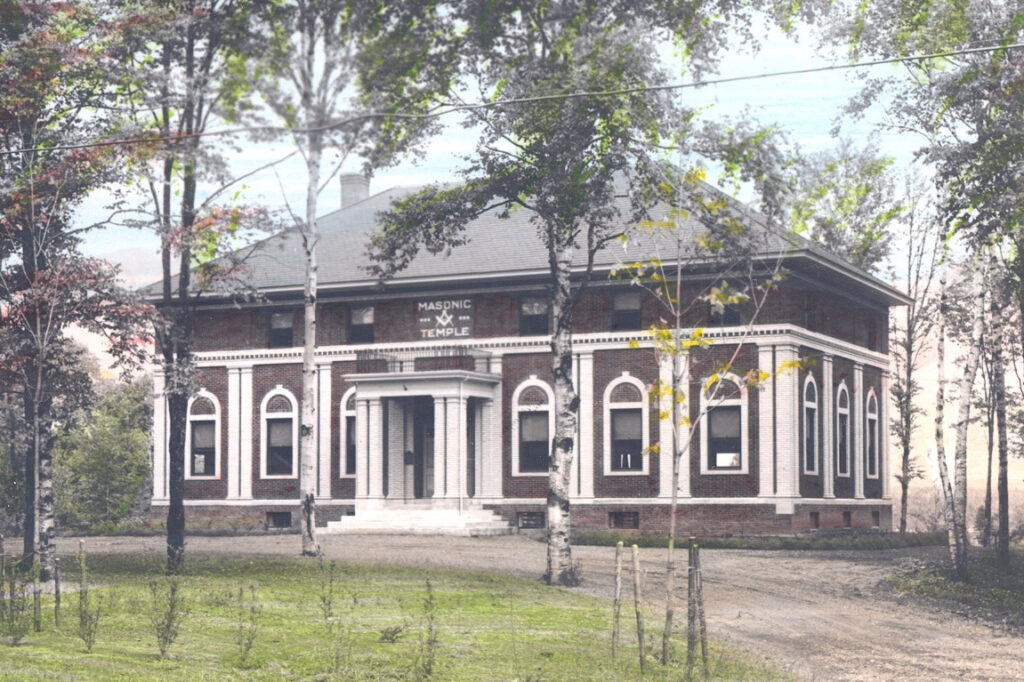
The Lodge soon after it was built in 1929.