Moosehead Then & Now: April 1976
April 1976 arrived with the country still sorting through a busy political season. Gerald Ford and Ronald Reagan were locked in one of the closest Republican primary fights anyone could remember, and Jimmy Carter was quietly pulling away on the Democratic side. At the movies, “All the President’s Men” had just opened — Watergate still close enough that audiences packed the theaters to watch it play out again on screen. And on the radio, Johnnie Taylor’s “Disco Lady” sat at number one for the entire month, the first single ever certified platinum. Spring was coming. The country was moving.
Here in Maine, a harbor seal named Andre was making news of his own. Andre had wintered at the New England Aquarium in Marblehead, Massachusetts, and in mid-April he was released to make his own way home to Rockport. Thirteen days and more than 220 miles later, he showed up right where he was supposed to be. His trainer Harry Goodridge was there at the cage for morning feeding, visibly relieved. Andre had been fighting with wild seals along the way and came home a little scraped up and a little worn out, but he knew a good thing when he saw it. Some things you can count on.
A Loss the Town Felt
April 10 brought the death of Dr. Isaac Nelson, 71, who had practiced medicine in Greenville for sixteen years after spending twenty-four summers here before that. He was a general practitioner in the truest sense — the kind of doctor who answered calls at all hours, made rounds at the nursing home, and thought nothing of babysitting a new father’s other children at 2:30 in the morning after delivering their sibling. His office was on Pritham Avenue, in the building now occupied by Folsom Realty. The memorial service held April 21 at the GHS auditorium drew an outpouring that said everything about what he meant here. Colleagues, nurses, patients, clergy, and neighbors all spoke. Maurice Anderson, representing Charles Dean Memorial Hospital, captured it well when he quoted a former patient: Doc Nelson didn’t ever “just” help out. He was, as one former patient wrote in a letter read that evening, so much more than just the family doctor. He was a friend.
Dr. Charles Stone of the medical community called his passing “an immeasurable loss” and noted that in seventeen years Doc Nelson had become the town’s most reliable and available physician. The nursing staff remembered a man who fixed cars, investigated furnaces, sampled kitchen food, and sat on nursing home bedsides telling jokes — because he understood that loneliness had no prescription.
He came here from Brooklyn. He stayed because this was where he wanted to be. That’s a Greenville story.
A Fire in Rockwood
April also brought a hard night to Rockwood. In the early morning hours of April 13, fire destroyed a historic three-story building near the Kineo boat landing that had stood for seventy-five years — serving at various times as a hotel, dance hall, general store and post office. The building was fully engulfed by the time three trucks arrived from Greenville, twenty minutes away. Crews focused on saving the new post office next door. Strong winds sent jump fires racing through dry grass along the Moosehead shoreline for nearly a quarter mile.
The lone occupant, Bernard D’Augustine, was awakened by his dog and escaped unharmed.
But the night had one more blow to deliver. Lawrence Richards, Rockwood’s 48-year-old fire chief, collapsed and died shortly after arriving at the scene. He reportedly had just parked the truck and begun pulling out the hose when he was stricken. He was gone before the ambulance from Greenville arrived.
Richards was a lifetime Rockwood resident, a boat repairman, a member of St. Joseph’s Catholic Church, and by all accounts the kind of man a small community counts on without always saying so out loud. The building burned. The chief who answered the call did not come home. Some April nights stay with a region for a long time.
Not every story that month carried that weight. Some carried a different kind of meaning — the kind that only becomes clear years later, when you can see what was being built.
The Key Club and a Thread That Still Runs
April brought good news from the GHS Key Club. At the New England District convention held in Bedford, New Hampshire, faculty advisor Charles Carter was named Outstanding Club Advisor for New England — one of only three advisors recognized across the entire region, chosen by club members themselves submitting letters on behalf of their advisor. He would go on to win that recognition three times. For a small-town school to produce that kind of honor said something about the program Mr. Carter was building here.
That same spring Neil Jamieson was chosen as Lieutenant Governor of Divisions 25 and 26, overseeing all Key Clubs from Brewer to Caribou. It was a significant honor for a Greenville student. The following year, Neil went further, winning election as Governor of the entire New England district. The local club also chose its new officers, and I was elected as the president for the following school year — a role I was proud to take on, and one that gave me a front-row seat to what Mr. Carter was doing with that program.
What Carter built at GHS endured for almost 50 years. He retired from teaching in 2010 but continued to help with the Key Club until very recently. A generation later, the ripple of his work reached my own family. My daughter Susan, class of 2007, went on to serve as a Kiwanis International Trustee — the highest level of the organization worldwide. My son John served as New England Treasurer in 2009. Neither of those paths happens without the foundation Mr. Carter laid.
I spoke with him recently. Still sharp, still engaged, still very much part of this community. That’s what 50 years of showing up looks like.
The Key Club is still alive and well at GHS today, with teacher Isaac Crabtree serving as advisor. The thread runs unbroken.
The Sewer Fight Continues
The Moosehead Sanitary District spent April preparing for what everyone could see was coming: litigation. Board member William McKelvy, freshly elected to both the sanitary board and the board of selectmen, was blunt about the situation. The $4 million tertiary treatment plant had malfunctioned since day one, and McKelvy pointed out that for the same money, the town could have installed septic systems for every household in Greenville several times over. By late April the board had voted to initiate lawsuits by May 15 against the engineering firms, the contractors, the designers, and potentially the state DEP itself. Protecting the lake wasn’t just environmental policy — it was defending the region’s future. The fight was getting louder. And more expensive. But the community wasn’t backing down.
Spring Opening at Squaw Village
On a lighter note, April brought new energy to Squaw Mountain Village. Twenty-three-year-old Chris Devlin arrived from Sanford with his wife Pat to take over as manager and golf pro, the facility’s third change of management since the condominium opened in the late 1960s. Nearly $60,000 had already been spent on improvements — a new water hazard on the golf course, resodded tees, and a new waterfront facility with docking for twenty-two boats. The pro shop was set to open around May 1, with lessons, clinics, and twilight leagues to follow. The Devlins wanted to make Squaw Village a community operation, open to everyone. That vision stuck. Squaw Mountain Village golf course is still in operation today, busy throughout the summer months. On any July afternoon, you can still hear the thwack of drives carrying across the hillside.
Looking Back, Looking Forward
April 1976 was a month of contrasts — a community honoring a beloved doctor, mourning a fire chief, fighting for its lake, and watching spring arrive in the way it always does up here: a little late, a little cold, and more welcome for it.
Next month, we’ll look back at May 1976 — the ice going out on Moosehead Lake, the annual school fair, and a community getting ready for the upcoming bicentennial summer.
This column is brought to you by the Moosehead Historical Society, where every season brings new stories to uncover, preserve, and share. We’re here to keep Moosehead’s history alive — one memory at a time. You can support our work by volunteering or becoming a member at mooseheadhistory.org
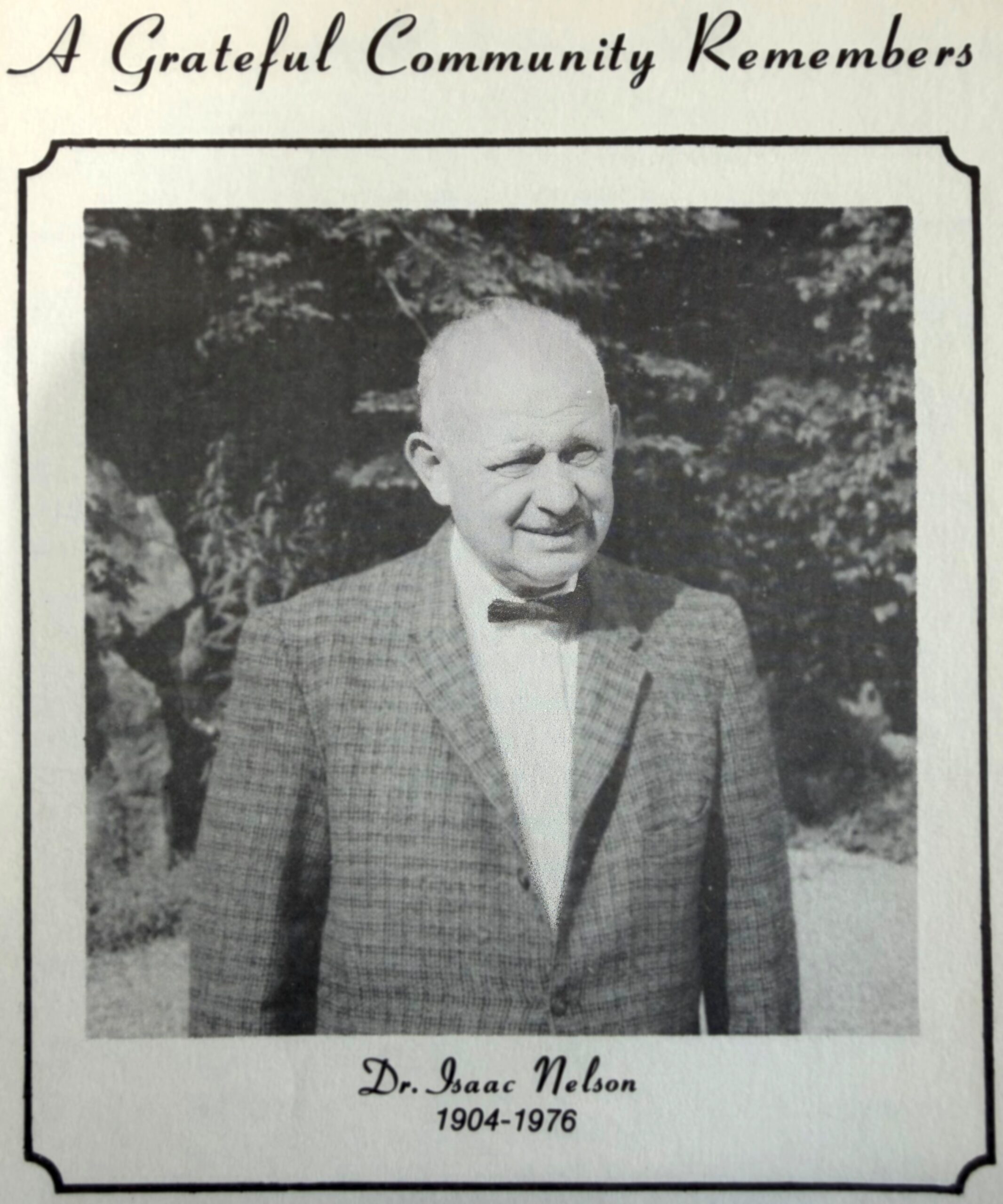
Doc Nelson, 1904–1976. He came here from Brooklyn, fell in love with Moosehead, and spent the rest of his life taking care of the people who lived here. Greenville didn’t forget him.
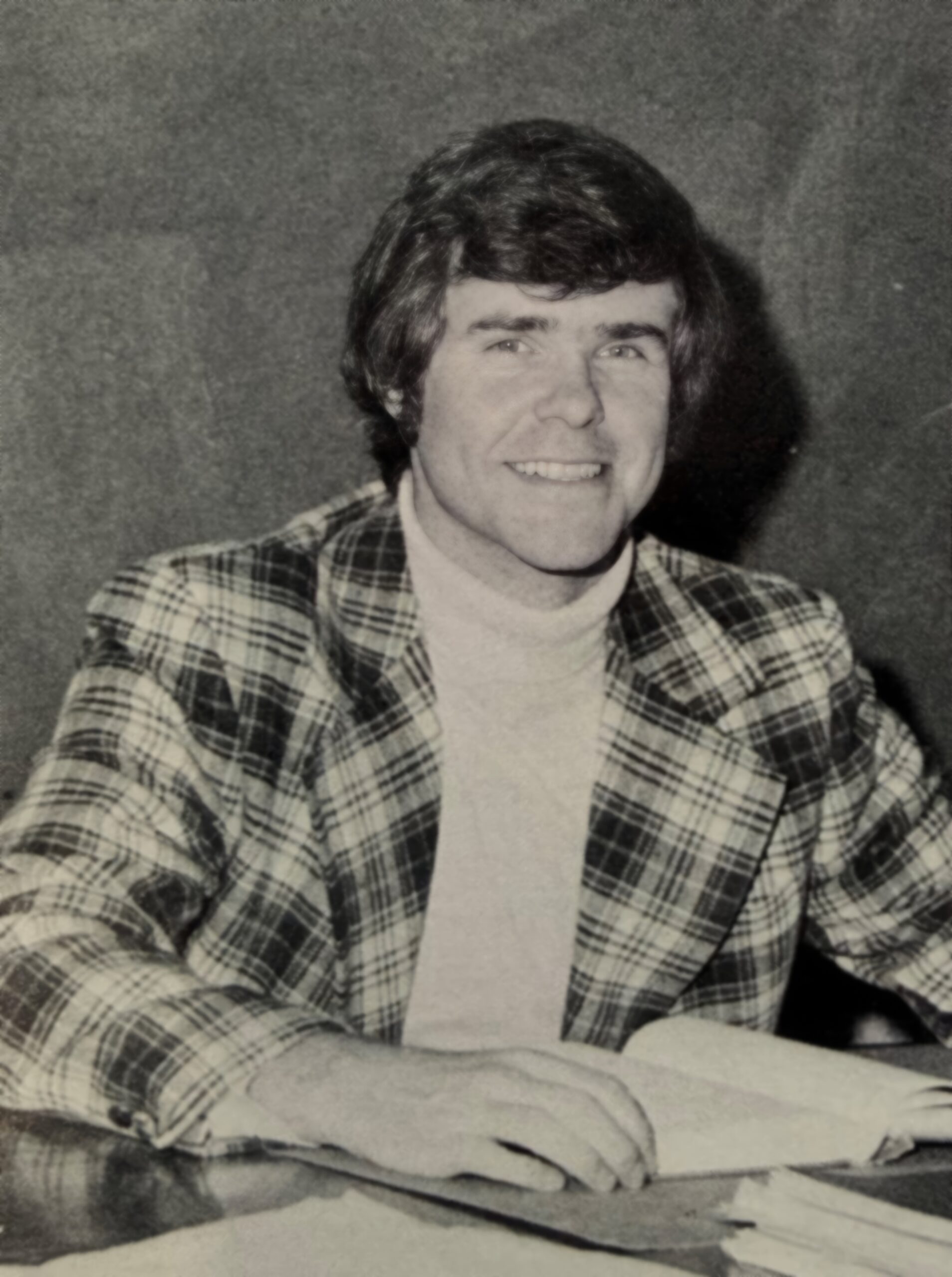
Mr. Carter at his desk at GHS — the man behind nearly 50 years of Key Club leadership in Greenville. Three-time Outstanding Advisor in New England, and still part of the community today.
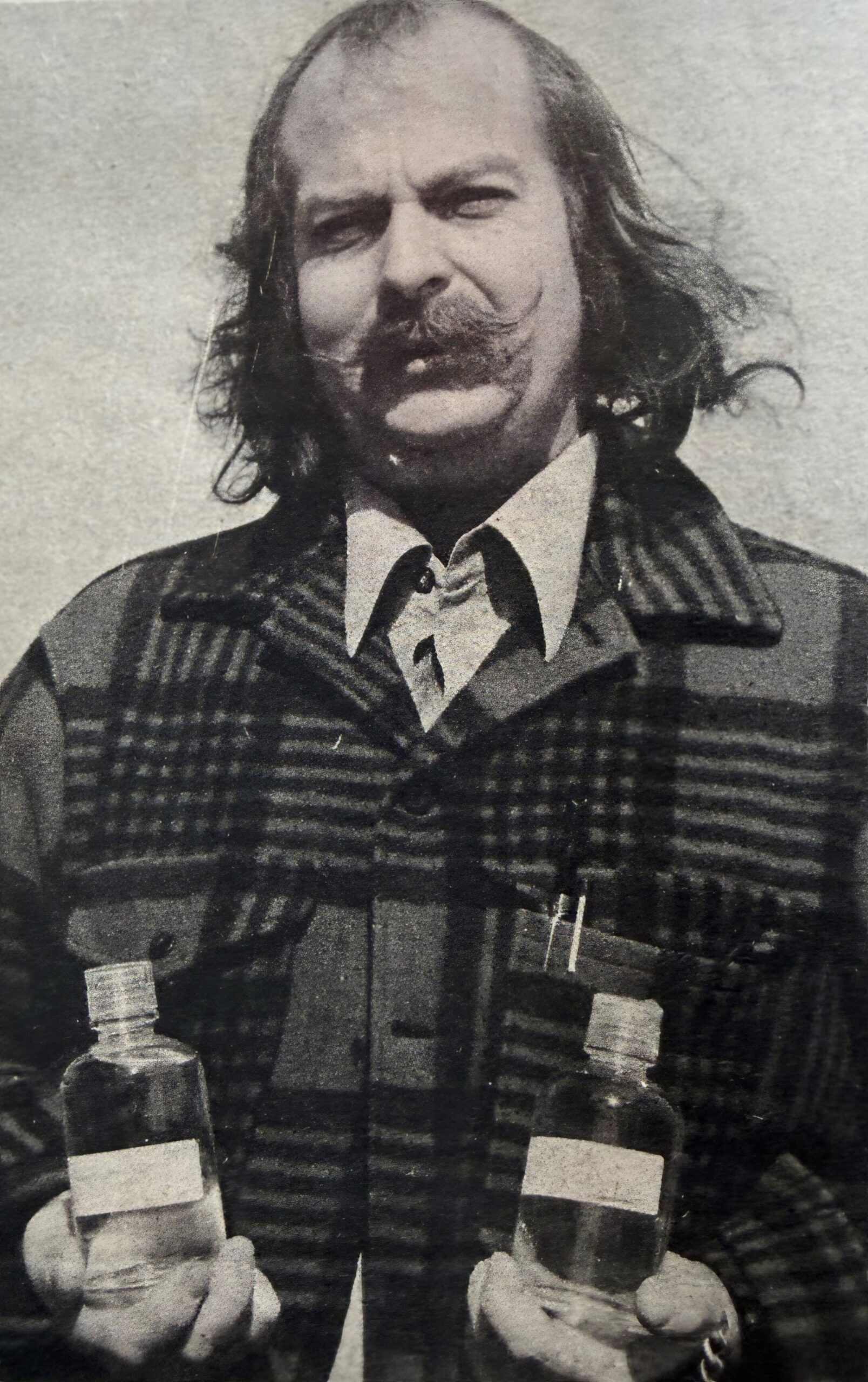
Bill McKelvy holding up two water samples — one from the treatment plant, one straight from the town tap. His point was hard to argue with: for $4 million, Greenville deserved better.
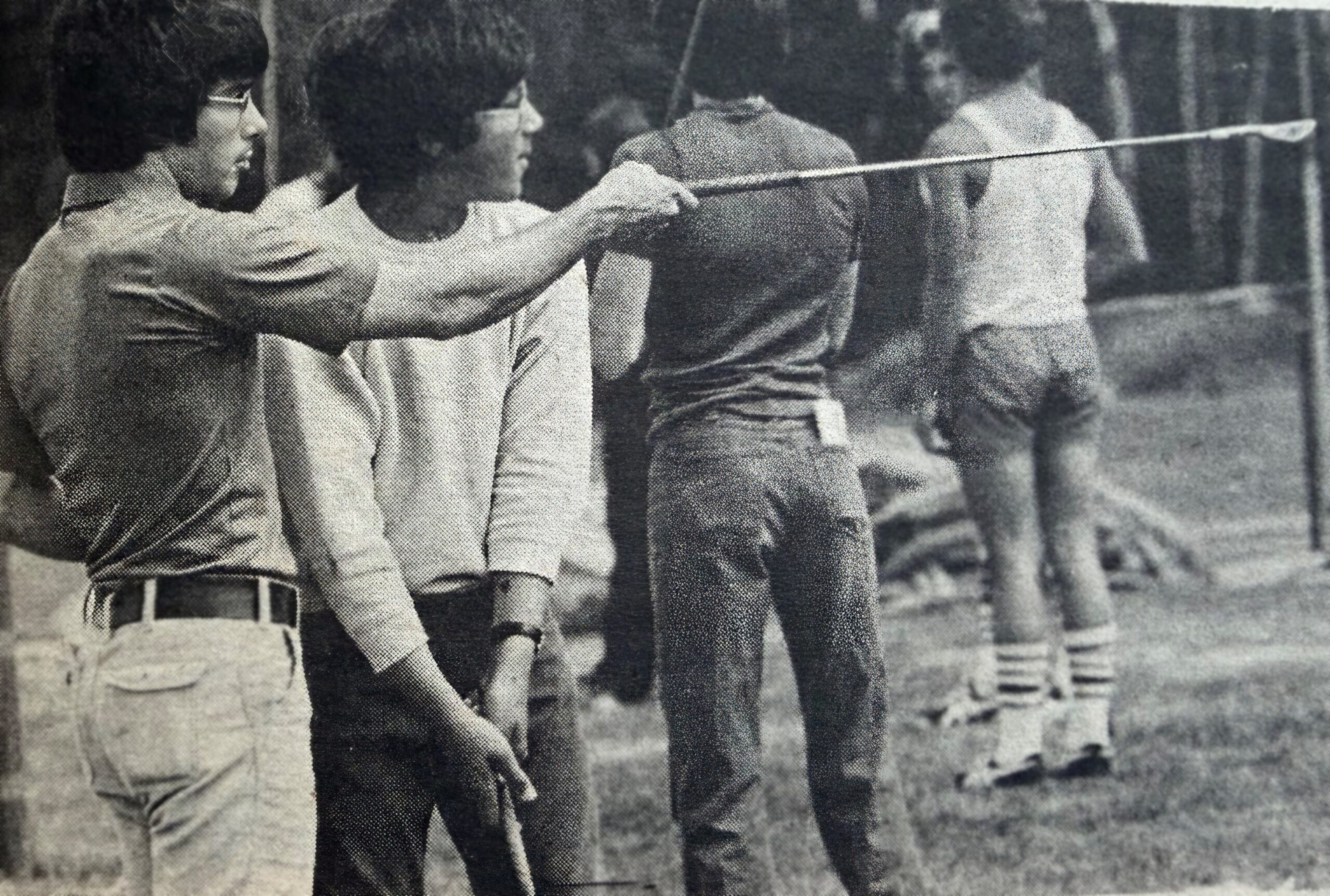
New Squaw Village golf pro Chris Devlin putting high school student David Preble through their paces in the spring of 1976. The course is still busy every summer.