Moosehead Then & Now: July 1976
July 1976 was Bicentennial summer. Across the country, Americans were looking back over 200 years and trying to look ahead. On the radio, “Afternoon Delight” by the Starland Vocal Band was at the top of the charts, drifting out of cars, camps, stores, and kitchen windows.
But here in Greenville, July had its own sound: parade music, boat motors, fireworks over the lake, and a town trying to solve a very serious problem.
Greenville’s Biggest Fourth in Years
The Fourth fell on a Sunday that year, so like many towns across the country, Greenville moved its big celebration to Monday, July 5 — the Moosehead Bicentennial Committee had been building toward it for months, and the town delivered. The “America the Beautiful Parade” stepped off from Greenville Junction at 9 a.m. with floats, antique cars, motorcycles, bicycles, doll carriages, and individual costumes competing for prize ribbons.
From there, the day never really stopped. Old-fashioned field events at the high school — dashes, sack races, three-legged races, wheelbarrow races, and the kind of egg throw that probably entertained the crowd as much as the contestants. At noon, the GHS Lakers played the Foxcroft Academy Ponies in a “Bitter Rivalry Baseball Game.” The Boy Scouts ran water events in the Village Cove. The Yacht Club staged a boat regatta in the afternoon, with the Katahdin anchored offshore as a special attraction.
By suppertime, the Key Club was serving a “Greenville Tea Party” supper at the high school cafeteria, feeding more than 350 people. The Senior Citizens Club ran Beano at Odd Fellows Hall. At 8 p.m., Jerry Brown and Adrian Breton directed the community band in a “Spirit of ‘76” concert in front of Breton’s Store. At 9:30, the Greenville Fire Department lit up the sky from the Junction Wharf. Then came a “Night of Memories Dance” in the high school gym.
More than 400 cars were parked around Breton’s and the Junction Wharf, lining the streets up toward the Cabbage Patch and out Birch Street. Town Manager Dick Ross called it one of the best celebrations Greenville had seen in a long time. It was a full-town effort, and the town showed up.
Rockwood had its own celebration, with logging contests at the Kineo docks — greased pole, log roll, crosscut saw, pulpwood throw, and canoe races. Warren, Chip, and Tris Cochrane swept most of the events between them. Moosehead knew how to celebrate the Fourth.
This year, Greenville and Rockwood will celebrate the Fourth again — fireworks, a parade, the lake villages doing what they always do. But 1976 felt different. The Bicentennial had a once-in-a-lifetime quality to it, and communities all across the country went all out. Greenville was no exception. Fifty years later, the celebration may be quieter, but the instinct is the same: people coming together around a shared place and a shared history.
A Greenville Kid on Broadway
While Greenville was celebrating on the lake, a seventeen-year-old girl from town was having a July Fourth she would never forget.
Cathy Jamieson had been chosen as one of the Maine students to take part in Operation Sail, the tall ship gathering that became one of the signature events of the Bicentennial summer. She sailed on the two-masted schooner Harvey Gammage from the Maine coast to Newport, Rhode Island, and then into New York Harbor for the July 4 celebration. The Gazette reported that Cathy marched in the ticker tape parade down Broadway with other ship crews and cadets, carrying a banner that said “Maine.”
“There were thousands of people around,” Cathy said. “Everyone along the streets was cheering ‘Yeah, Maine.’”
Cathy was Junior Class president, an honor student, and a 4-H state winner. In a summer full of national symbols, she gave Greenville one of its own.
A River Opens Up
That same month, another local story was unfolding on a very different kind of water.
For generations, the Kennebec from Moosehead’s East Outlet all the way down to The Forks had been a working river, driving timber south. By the summer of 1976, the last of the logs had been driven all the way down to Wyman Lake in Moscow, and for the first time that entire 23-mile stretch was free of floating wood. Wayne Hockmeyer and Alan Haley of Rockwood saw the opening and launched daily guided whitewater raft trips — some of the roughest water in the East. That new business was barely underway when my grandmother, Elaine Muzzy of Greenville, climbed aboard.
The Gazette reported that Elaine, age 68, may have held the unofficial record of being the oldest woman to venture into the whitewater of the Kennebec River. She was on Hockmeyer’s big raft, making the run from East Outlet to The Forks with eight other people. Along the way, their raft came upon a smaller raft that had capsized, and they pulled a woman out of the water.
My grandmother did not paddle. She held on.
“I loved every minute of it,” she said afterward. “Anyone can do it unless they’re afraid of water. You really get soaked, but it’s a wonderful trip to go on.” She wanted to go again.
What was new and uncertain in 1976 has become a major outdoor industry for Greenville, The Forks, and the wider region. Thousands of people now run these rivers every year with professional guides and outfitters. Elaine Muzzy was not thinking about economic development when she climbed into that raft. She was just game for an adventure. But she was there at the beginning.
Around Town
The Moosehead Sanitary District finally got some good news in July. After months of mounting bills and a plant that had been plagued with problems since it opened, residents packed the GHS auditorium on July 26 to hear from the EPA, the Maine DEP, and Maine’s congressional delegation. The EPA agreed to fund the plant’s operating and maintenance costs tied to its design and construction flaws — the first time in the country that federal money had been allocated for that purpose. Hubbard Trefts, the district’s chairman, summed up the relief in one line: “I think we have found a real friend in the EPA.” The fight over the discharge pipe itself was far from over, but for a town that had been struggling to pay for a system it couldn’t afford, it was a real break.
Town Manager Dick Ross reported that work to extend Spruce Street toward the railroad tracks was nearly finished that month, and a new sidewalk was going in across from the hospital. Spruce Street is back under construction again this year, with the Northern Forest Center building new housing there — a different kind of project, but the same street still finding ways to grow.
And on a lighter note, Jake Morrell at the Board and Batten on Pritham Avenue was flying to Milbridge every week that summer to bring back 300 pounds of fresh live lobster, kept in a tank he built himself. Lobster in landlocked Greenville was a novelty then. These days, a few coastal families with camps up here still make sure it finds its way to Moosehead.
Tennis had a real following in Greenville that summer too. The Gazette covered matches nearly every week, with Cheryl Fowle, Sheila Irvine, and Lisa Harris among the young players making names for themselves on the courts, while Doug Williams held the top ranking in the adult men’s league. The courts are still there today — and so, in a sense, is Lisa Harris, who now serves on the Moosehead Historical Society’s board of trustees.
A First for C.A. Dean
On July 4, as the Bicentennial celebrations were getting underway, a one-and-a-half-hour-old infant girl weighing four and a half pounds was evacuated from C.A. Dean Hospital and flown to Maine Medical Center in Portland. The 112th Medical Division of the Maine Army National Guard provided the aircraft. The March of Dimes furnished a special transport incubator. The baby was doing well. The Gazette noted that this was a “first” for C.A. Dean Hospital, though it did not name the family — and a search of the records hasn’t turned up who she was. If you know, the Historical Society would love to hear from you.
In the busy summer season, most of us are used to seeing or hearing LifeFlight come in and out of Greenville. It is part of how rural emergency care works now. What was notable enough in 1976 to be called a first has become something we depend on.
Looking Back, Looking Forward
July 1976 was a month that had everything. A town threw itself a proper Bicentennial celebration. A Greenville teenager carried Maine pride down Broadway. A 68-year-old woman held on through the Kennebec whitewater and loved every minute of it. A community fighting for Moosehead Lake finally caught a break. And a newborn child made it from Greenville to Portland in time.
Nearly fifty years later, those stories still feel familiar. We still gather. We still send young people out into the world carrying the name of this place with them. We still depend on rivers, forests, lakes, roads, hospitals, volunteers, and local institutions. We still argue over how to protect Moosehead Lake and how to pay for what a small town needs.
And, every so often, someone like Elaine Muzzy reminds us that history is not only made by officials, committees, and big events.
Sometimes it is made by a grandmother in a raft, soaked to the skin, holding on, and ready to go again.
This column is brought to you by the Moosehead Historical Society, where every season brings new stories to uncover, preserve, and share. We’re here to keep Moosehead’s history alive — one memory at a time. You can support our work by becoming a member at mooseheadhistory.org.
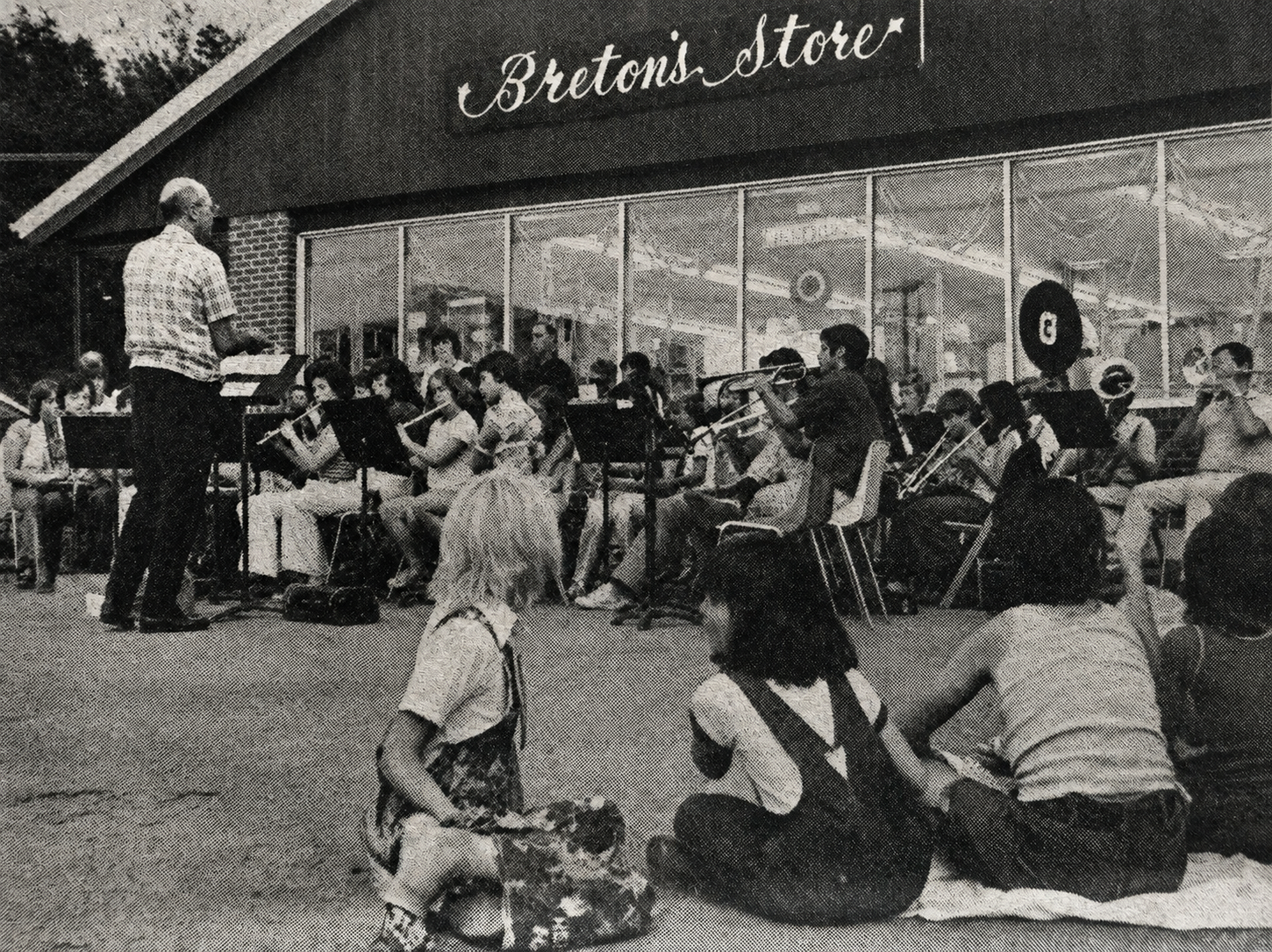
The community band performs the “Spirit of ’76” concert in front of Breton’s Store on the evening of July 5, 1976. Fireworks over the Junction Wharf followed at 9:30.
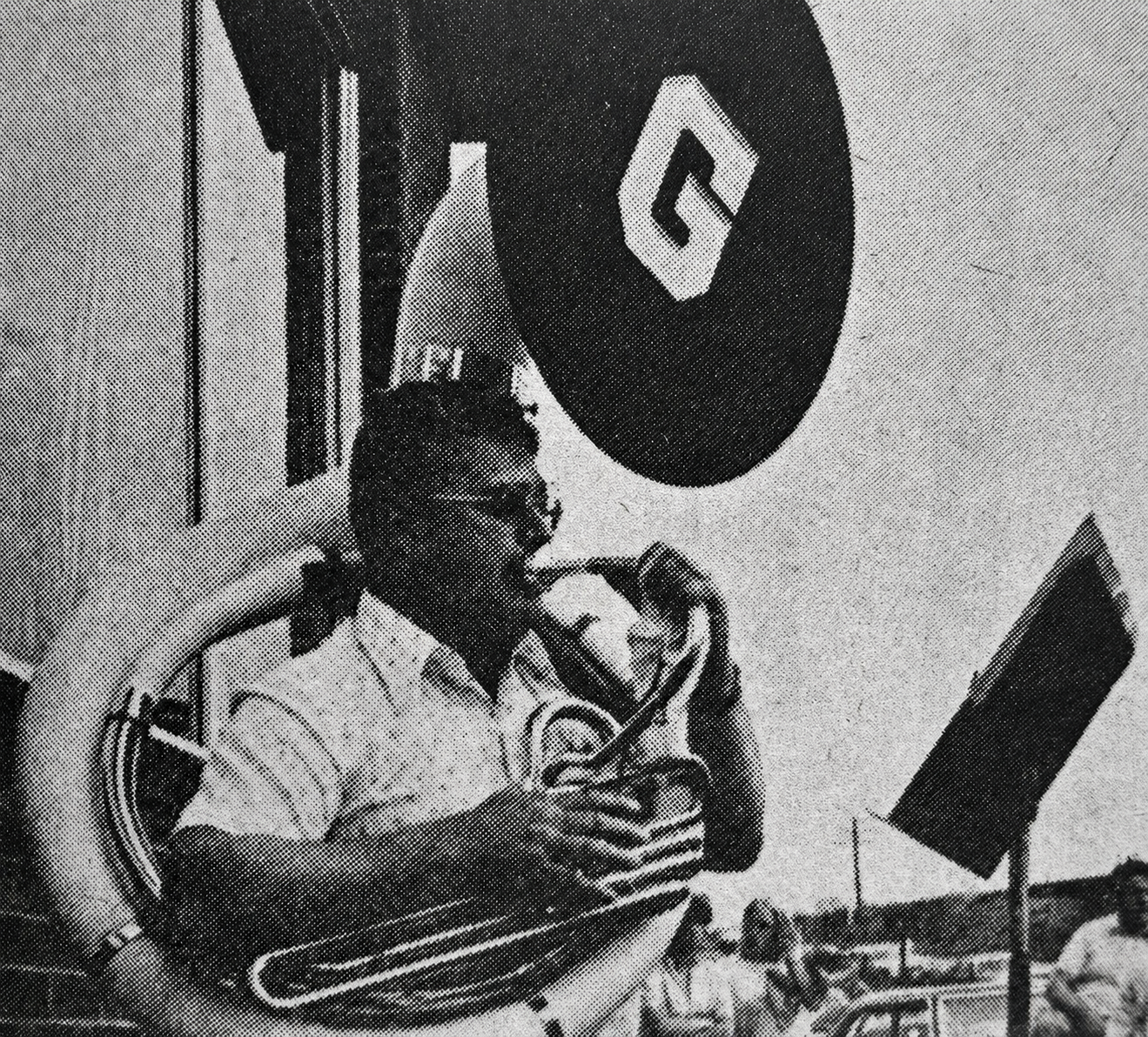
Adrian Breton — treasurer of the Moosehead Bicentennial Committee and co-director of the “Spirit of ’76” band — plays tuba during the July 5 celebration. Breton helped organize the day’s events from start to finish.
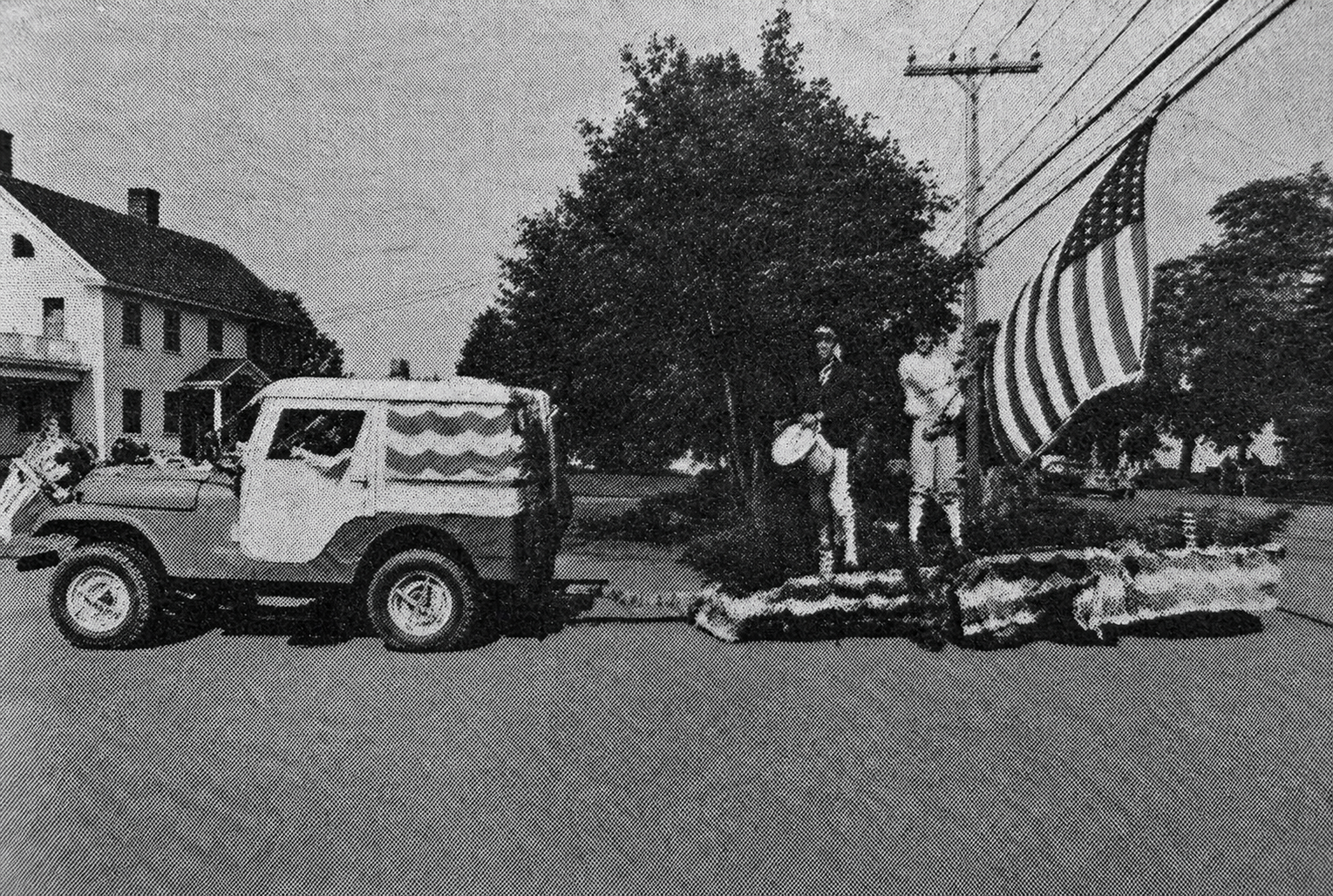
A Bicentennial float makes its way through Greenville during the “America the Beautiful Parade,” July 5, 1976. More than 400 cars lined the streets for the day’s celebrations.
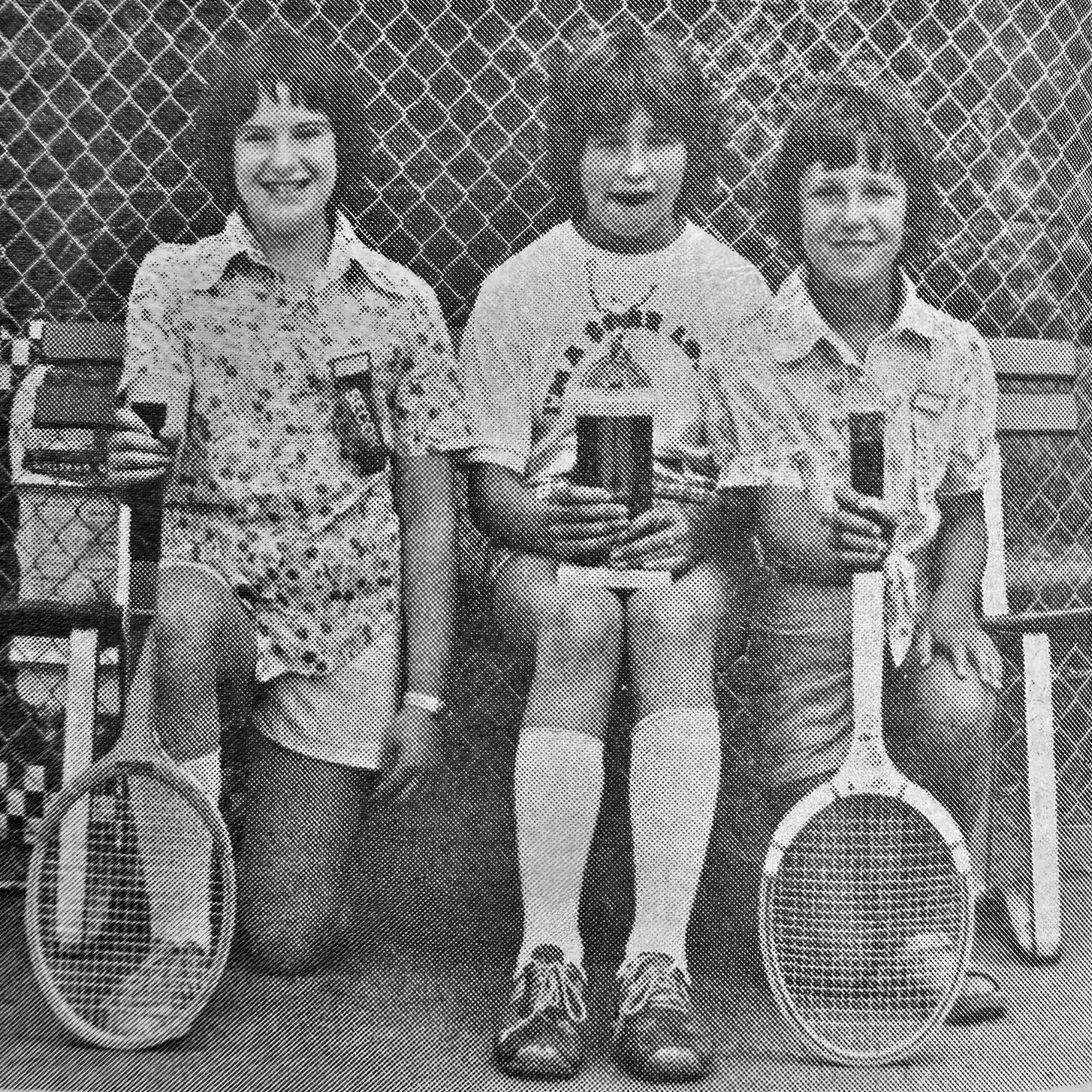
Cheryl Fowle, Sheila Irvine, and Lisa Harris — Greenville tennis league winners, summer 1976. Lisa Harris now serves on the Moosehead Historical Society board of trustees.