Moosehead Then & Now: March 1976
March 1976 arrived with the country still sorting through a restless winter. Gerald Ford was in the White House, facing a primary challenge from Ronald Reagan that was closer than anyone in Washington had expected. The swine flu scare — a strain detected at Fort Dix in February — was prompting serious talk of a national vaccination program. On the radio, the Four Seasons were sitting at number one with “December 1963 (Oh, What a Night),” one of those songs that felt like it would never leave the charts. At the movies, One Flew Over the Cuckoo’s Nest was the picture everyone was talking about — it would go on to sweep the Academy Awards, winning Best Picture among its five Oscars, a rare clean sweep that hadn’t happened since It Happened One Night back in 1934. And across the country, a new craze was sweeping the airwaves: citizens’ band radio. CB had gone from a trucker’s tool to a national obsession almost overnight, and Sports Illustrated had taken notice. So had a writer named J.D. Reed, who drove up to Greenville to see what it all looked like from the edge of Moosehead Lake.
Greenville Makes Sports Illustrated
The March 29, 1976 issue of Sports Illustrated ran a feature called “A Big 10-4 on the Call of the Wild” — a national look at how CB radio had transformed the way Americans hunted, fished, skied, and snowmobiled. Reed traveled widely for the piece, but he came to Greenville, and the town figures prominently. The population is listed as 1,894. Ninety percent of the town’s commerce, the writer notes, is tied to hunting, fishing, skiing, snowmobiling, cabins, and camps. At the center of the Greenville section is a man described as a contractor who builds roads to summer cottages, plows snow in winter, owns a motel, rents his barn for boat storage, and “generally wears as many hats as it takes to make a living.”
That man was my father, Bill Muzzy.
I was fifteen years old that spring and sports-obsessed, with a subscription to Sports Illustrated that I read cover to cover every week. You can imagine what it was like to pull that issue out of the mailbox and find my father quoted in the pages of a national magazine. I still have a vivid memory of that moment. He was described so plainly and so accurately — a Greenville man through and through, practical, outdoors-minded, a problem-solver who made things work. Reed captured him well. In the article, my father talks about carrying CB walkie-talkies on snowmobile trips, shutting down the sleds at prearranged times to check in with friends on the trail. “It’s a great safety factor,” he says, “because there’s lots of accidents and you can tell others to watch out for stumps or fences on a trail.” He also recalls stopping mid-hunt to make a call and looking up to find three deer walking away just out of range. “I nearly threw the damn radio away,” he says. That’s the man I knew.
The article also features warden Glenn Perkins and his crew gathered in the Fish and Wildlife kitchen on the shore of Moosehead, talking over coffee about how CB had changed the cat-and-mouse game between wardens and poachers. And it introduces the “Indian Pond Poacher” — a trapper living in an isolated camp twenty miles from town who spent his weekends broadcasting elaborate fictional conversations with an imaginary state trooper on channel 11, tying up the airwaves and frustrating real poachers in the process. My father’s verdict: “He ought to be writing some of those spy shows on TV. He’s real good.” Over the years the Indian Pond Poacher became something of a local institution. As he got older he left his camp and moved into Greenville, but his legend on the airwaves lived on long after.
What strikes me most, looking back at that piece, is what it says about Greenville in 1976. A national magazine came here not because of a disaster or a curiosity, but because this was a place where people were actually living the outdoor life that the rest of America was dreaming about. We weren’t a backdrop. We were the real thing.
And here’s the thing: the reason CB radio mattered to Greenville in 1976 is the same reason it still matters today. Cell service in much of the Moosehead region is unreliable at best and nonexistent at worst. Local woodsmen, loggers, and guides still use CB — not out of nostalgia, but because the woods are bigger than the signal. Some things don’t change because the land doesn’t change.
Town Meeting and the Business of Governance
On March 15, 396 voters turned out for Town Meeting at Greenville High School — a strong number, larger than the year before. Richard Gould was re-elected to the board of selectmen, and William McKelvey won the other open seat. The Sanitary District board got three new members: Hubbard Trefts, McKelvey, and Lynne Haudenschield. Town Manager Dick Ross was re-appointed, wearing his usual stack of hats. Carol Harris went to the Shaw Library board, Nancy Soule to the Moosehead Recreation Committee. Voters approved funding for a dog pound, the Bicentennial committee, and the Senior Citizens Club, among other items. A full warrant, worked through steadily — the way Greenville has always done it.
Worth noting: Greenville now holds its annual meeting in June rather than March. The calendar shifted with the times, but the purpose hasn’t — neighbors gathering to make decisions together, article by article, the old-fashioned democratic way.
The Lake and the Hard Work of Protecting It
March was another difficult month for the Moosehead Sanitary District. At the heart of the trouble was a piece of equipment called a moving bed filter, manufactured by Johns Manville — at the time one of the largest building materials companies in the country. The filters were supposed to be the final stage of the wastewater treatment process, removing phosphorus before effluent was discharged into Moosehead Lake. They had never worked properly. In March, DEP Commissioner William Adams wrote a sharp letter directly to Johns Manville demanding the problem be fixed by May 1 — or the filters would be removed entirely. Community letters filled the Gazette, ranging from outrage to cautious patience. Hubbard Trefts, newly elected as District chairman, called for shared problem-solving and published a detailed explanation of how the plant was designed to work. By early April, the Protect Moosehead Lake Association and the Sanitary District board were beginning to find common ground. It was contentious and unresolved — but it was a community that refused to stop caring about its lake. That matters, because Moosehead today remains one of the cleanest large lakes in the Northeast. It didn’t happen by accident. The names in those Gazette letters and DEP reports aren’t famous. But they did the work.
The Ski Team, the Banquet, and a Few Names Worth Remembering
On the evening of March 25, more than 170 people packed the GHS cafeteria for the winter sports awards banquet. Roberta Bradford and Adrian and Olive Breton prepared a spaghetti dinner. Woodie Bartley and Judy Ryder took home most valuable player trophies for basketball. Neil Jamieson won the desire to excel award. Chip Cochrane — who had placed 2nd in the state in Class D ski competition and raced at Lake Placid earlier that winter — was named most valuable ski team member. The girls’ basketball squad saw Jan Caron, Judy Ryder, Val Larrabee, Stephanie Poulson, and others recognized with varsity letters. It was a full house, a good meal, and a proper sendoff for a winter that had given this community plenty to be proud of.
The Lily Bay House: A Landmark Quietly Gone
Sometime in March 1976, fire and bulldozers finished off the Lily Bay House — a building that had stood on the eastern shore since the 1880s, first as a lodging house for lumbering crews, later as a resort hotel that operated well into the twentieth century. By the time the end came, it was beyond saving. The Gazette noted its passing briefly. That brevity itself says something — not indifference, but the quiet acknowledgment that some things run their course.
Upstairs at Leisure Life
On Saturday, March 27, the hammering stopped above Leisure Life Lanes and the new bar and game room opened its doors. About a hundred people showed up — this for a place that hadn’t been widely advertised. The space was carpeted, indirectly lit, outfitted with “Moosehead furniture,” and built for an evening out: a raised stage, a dance floor, a bar seating twenty-nine, pool tables, air hockey, and a jukebox. New manager Richard “Chevy” Chevelier had come up from Sanford with fourteen years in the restaurant business.
Nearly fifty years later, the Adrien family has owned the restaurant since 1998, running it as the Trailside Restaurant, and it remains just as popular as ever. The stage is long gone, but the bar looks much the same as it did then. The bowling lanes below — once the heartbeat of Leisure Life — are now the town’s recreation center, a different kind of gathering place but a gathering place still.
Looking Back, Looking Forward
Next month, we’ll look back at April 1976 — a month that brought the World Championship Downhill Canoe Races to Squaw Mountain and the opening of the Senior Play at GHS. The community also said goodbye to Dr. Isaac Nelson, a longtime Greenville physician whose name was woven into the fabric of this town for decades. And the Sanitary District kept moving — filing legal action against those responsible for the filter plant failures and formally requesting EPA funding to study alternatives to lake discharge. Spring was arriving, and the Moosehead region had plenty on its plate.
This column is brought to you by the Moosehead Historical Society, where every season brings new stories to uncover, preserve, and share. From ski trails to supper tables, we’re here to keep Moosehead’s history alive — one memory at a time. You can support our work by becoming a member at mooseheadhistory.org.
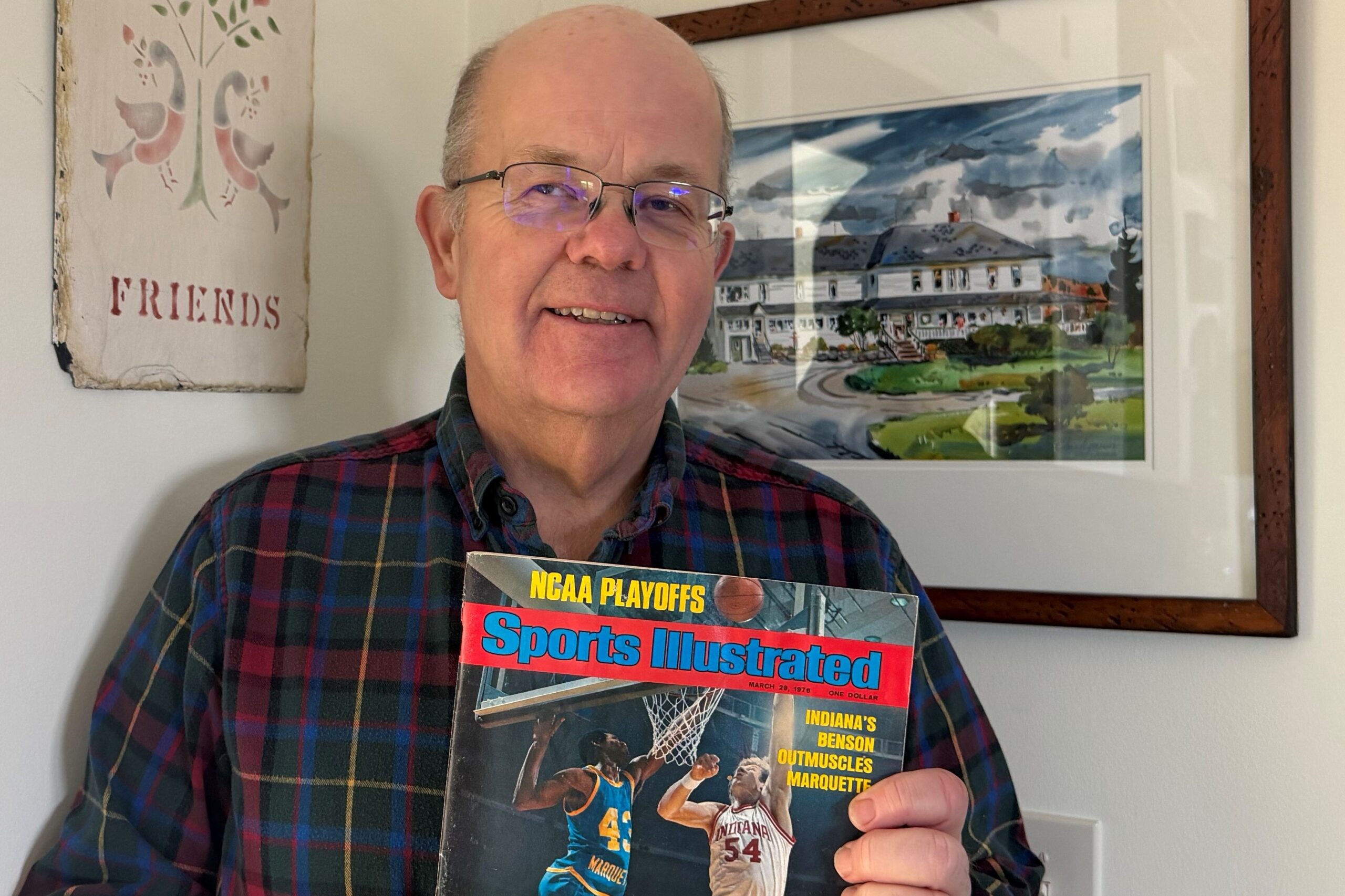
March 29, 1976 issue of SI
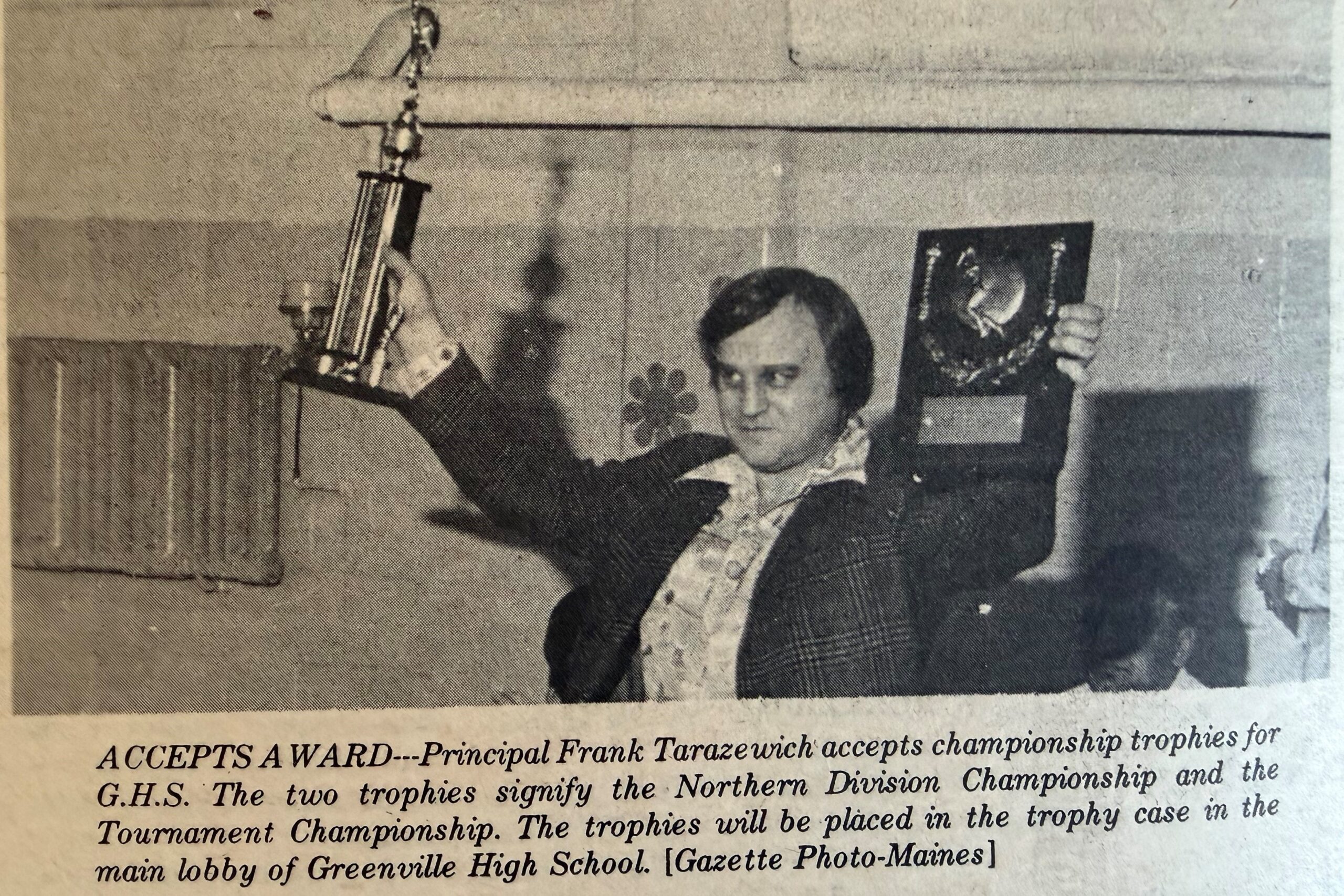
March Sports Banquet
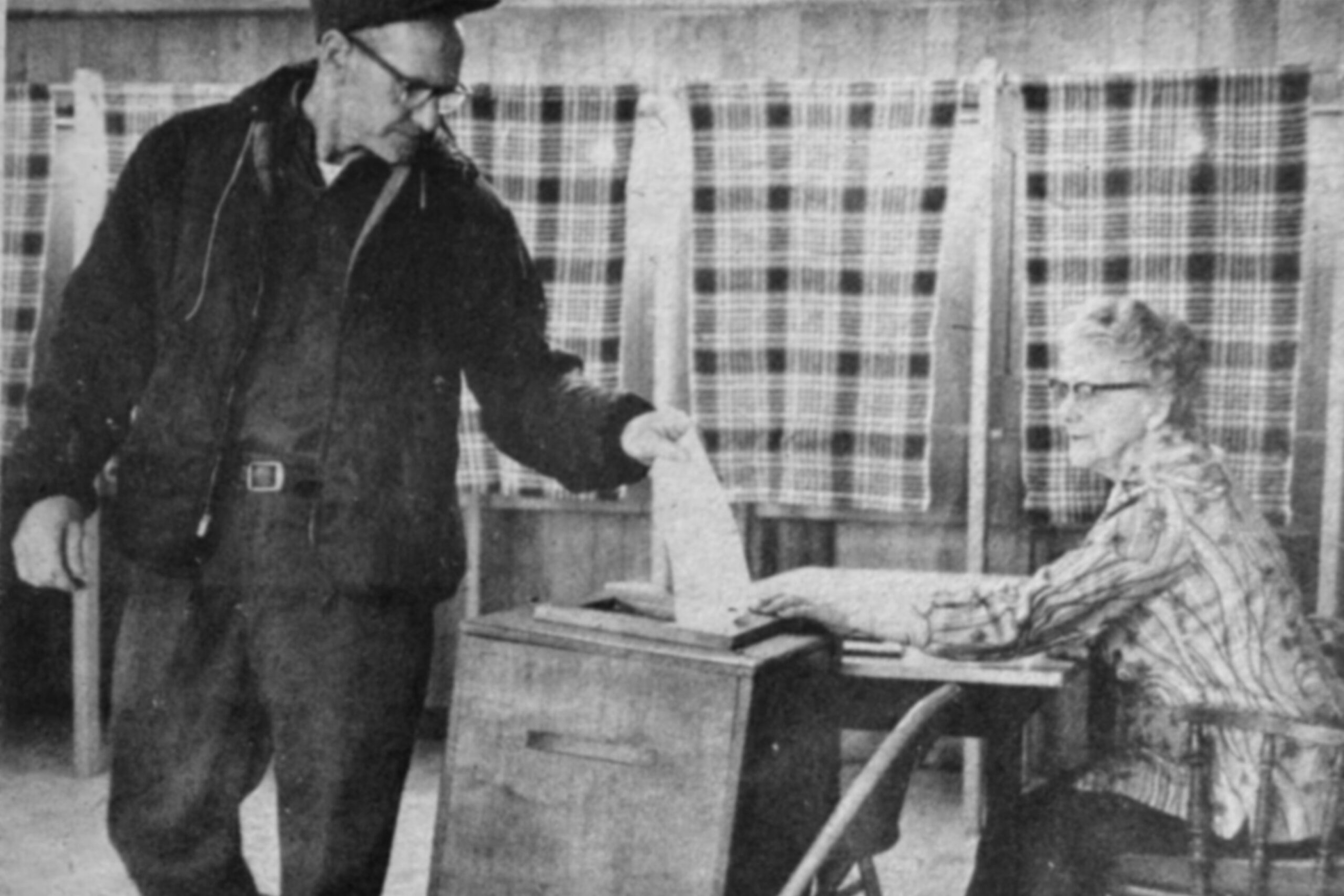
Municipal Elections