Moosehead Then & Now: May 1976
May 1976 arrived with the country in a complicated mood. On the radio, Paul McCartney’s “Silly Love Songs” and the Sylvers’ “Boogie Fever” were trading places at the top of the charts — light, catchy, easy to dance to. But at the movies, audiences were lining up for “All the President’s Men” — a Watergate thriller released just two years after Nixon walked out of the White House. The country was trying to have fun and reckon with itself at the same time. Gerald Ford and Ronald Reagan were locked in a Republican primary fight nobody expected to be this close, Jimmy Carter was pulling away on the Democratic side, and the Bicentennial summer was just weeks away — a chance, maybe, to reset and remember what the country was supposed to be about.
Here in Maine, the mood was its own kind of complicated. In Augusta, someone had bombed the Central Maine Power headquarters — twice — in a single week, protesting a rate increase that would have hit rural customers hardest. Nobody was hurt, but the State House was evacuated and the state was shaken. And out in the woods, the spruce budworm was on the move. The state was preparing to spray millions of acres that spring — the first chapter of a slow-moving crisis that would pit timber companies, environmentalists, and state government against each other for years to come.
Up here on Moosehead, spring was arriving in its own way and on its own schedule, as it always does.
The Ice Goes Out
The ice officially left Moosehead Lake at 12:40 p.m. on Saturday, May 1 — just in time for the opening of fishing season. The Kiwanis Club’s annual ice-out contest drew guesses from across the region and beyond, and the $100 winner was Tim Levasseur, the Moosehead Sanitary District’s sewer plant operator, who guessed 12:30 p.m. — only ten minutes off. Second and third place went to out-of-staters, which is how it goes sometimes.
As I write this fifty years later, the ice is still very much present on Moosehead. It has been a long, cold winter — ice fishermen reporting some of the thickest ice in years, thick enough that many needed extenders on their augers just to reach the water. Last year the ice went out on April 29. Given what we’re looking at right now, that feels like a distant dream. The lake will go when it’s ready. It always does.
The Mill at the Junction
One piece of unfinished business hung over Greenville that spring, quiet but not forgotten. Beaudry Lumber at Greenville Junction — built in 1973 into a 300-person operation before inflation and a collapsed lumber market shut its gates on a Sunday evening in October 1974 — was still sitting idle. Eighteen months of silence from a site that had been making noise, one way or another, since Great Northern Paper built its machine shop there in 1921. Town Manager Dick Ross was quietly working to find a buyer, but nobody was panicking. Everybody knew, though. A town of fewer than 2,000 people doesn’t lose 300 jobs and stop thinking about it.
A sale came together the following year. The Boulette brothers of Winslow reopened the mill in the summer of 1977 — the first of several owners who would keep trying to make that site work through the 1980s and into the 1990s. The mill is long gone now, the grounds subdivided into the industrial park behind Breton’s Store. But one building from the original Great Northern complex is still standing. It’s Woody’s Bar — which, depending on your point of view, means that site has been serving the working people of Greenville Junction for over a hundred years. The work changed. The purpose didn’t
The Rollicky-Pollicky School Fair
On May 6 and 7, Greenville High School held its Rollicky-Pollicky School Fair — only the second since the tradition had been revived in 1975, after going dormant since the 1950s. The parade kicked off at 1 p.m. in front of Lynn’s General Store on South Main Street — now a vacant lot across from Studio North — with floats from every class, including a Betsy Ross entry from the 8th grade, a Senior Prom float judged prettiest, and a tie for most original between the Key Club and the 7th grade. That evening a gym show filled the auditorium, and on Friday the school gym opened for games and food while the auditorium hosted two performances of the Variety Show. The Fowle Sisters, the Poulsons, and the Olsens performed. A buffet supper followed.
Just last week — April 16 — the Key Club put on a variety show of their own. Plenty of local talent, and more than a few memories coming back. Among the performers were Charles and Keith Carter — and anyone who remembers the Rollicky-Pollicky of 1976 will know exactly why that name means something.
Ken’s, Lena’s, and the Blind Munch
Not every story from May 1976 involves civic drama. Some are just about a good meal and a place to go.
On the west side of North Main Street, just before the turn to Leisure Life, there was a small lunch spot that had been through a few lives by 1976. It started as Ken’s Dog House, opened in 1963 by Ken Lavigne. Ken’s closed around 1970. In 1971, Mrs. Lewis Gravelle — Lena — took it over, refurbished the building, added picnic tables with a view of the lake, and opened Lena’s Lunch. Chicken, fish fillets, burgers, Italians, homemade brownies. Lena’s pizza burgers were the thing — just ask Matt and Mark Muzzy, who knew their little brother would never turn down a ride to get one of her homemade Whoopee Pies.
By 1976 it had become the Blind Munch, under new proprietor Darlene Packard. The name alone made people smile. And the hours — seven days a week, 11 a.m. to midnight most days, until 2 a.m. on the busy nights — tell you something about what Greenville once expected from a place like that. Today if you want a meal after 8 p.m. you are doing some planning. The Dairy Bar will be opening soon for the season, and that’s worth celebrating. But there was something to be said for a town that kept a kitchen running until 2 in the morning.
The Kiwanis Fishermen’s Breakfast
On May 29 — Memorial Day weekend, fishing season in full swing — the Moosehead Lake Kiwanis Club held its annual Fishermen’s Breakfast at the Community House, doors open from 4 to 8 a.m. Two dollars got you bacon and eggs, baked beans, rolls, donuts, and coffee. It was the kind of morning that said everything about what this community was: up before dawn, feeding its neighbors, ready for the lake. The American Legion now holds a Memorial Day Sunday breakfast that’s become its own tradition — and I can attest to the food. I rarely miss one.
A Few More Notes from May
Rockwood took another hard hit when fire destroyed eight of the ten newly completed Powder Horn Condominium units near the old Kineo View Hotel site. Owner Albert Theriault and his family escaped unharmed but lost everything. The loss was estimated at $185,000. Rockwood had already lost a landmark building and its fire chief in April. May was not a kinder month.
Two hundred students, Cub Scouts, and Scott Paper Company crews filled eight truckloads of trash from a five-mile stretch of Greenville roads during Clean-Up Week, organized by Town Manager Dick Ross and Key Club Advisor Charles Carter Jr. The elementary kids handled the school grounds. Everyone went home with soda and chips.
After twenty-seven years as the Gazette’s voice of local news, Ruby Brett was easing her way into retirement. Ruby’s column was as old as the Gazette itself — she had been there since the beginning, drafted to answer phones when the paper first opened its office in the old town hall, and somehow never left. She covered the hospital, the churches, the Kiwanis, the DAR, and more community gatherings than anyone could count. “Every year I think I’ll retire,” she said, “and then I think, gee, it’s hard work, but it’s interesting work, and you really do meet some wonderful people.” Ruby, you were a legend. The Gazette was never quite the same without you.
Looking Back, Looking Forward
May 1976 ended with the Bicentennial summer finally within reach. The fishing season was open, the ice was gone, the fair had come and gone, and Greenville was doing what it always does in late May — shaking off the last of winter and getting ready for what comes next. Next month we’ll look back at June 1976 — graduation season at GHS, the arrival of summer on the lake, and a community stepping fully into its Bicentennial year.
This column is brought to you by the Moosehead Historical Society, where every season brings new stories to uncover, preserve, and share. We’re here to keep Moosehead’s history alive — one memory at a time. You can support our work by volunteering or becoming a member at mooseheadhistory.org.
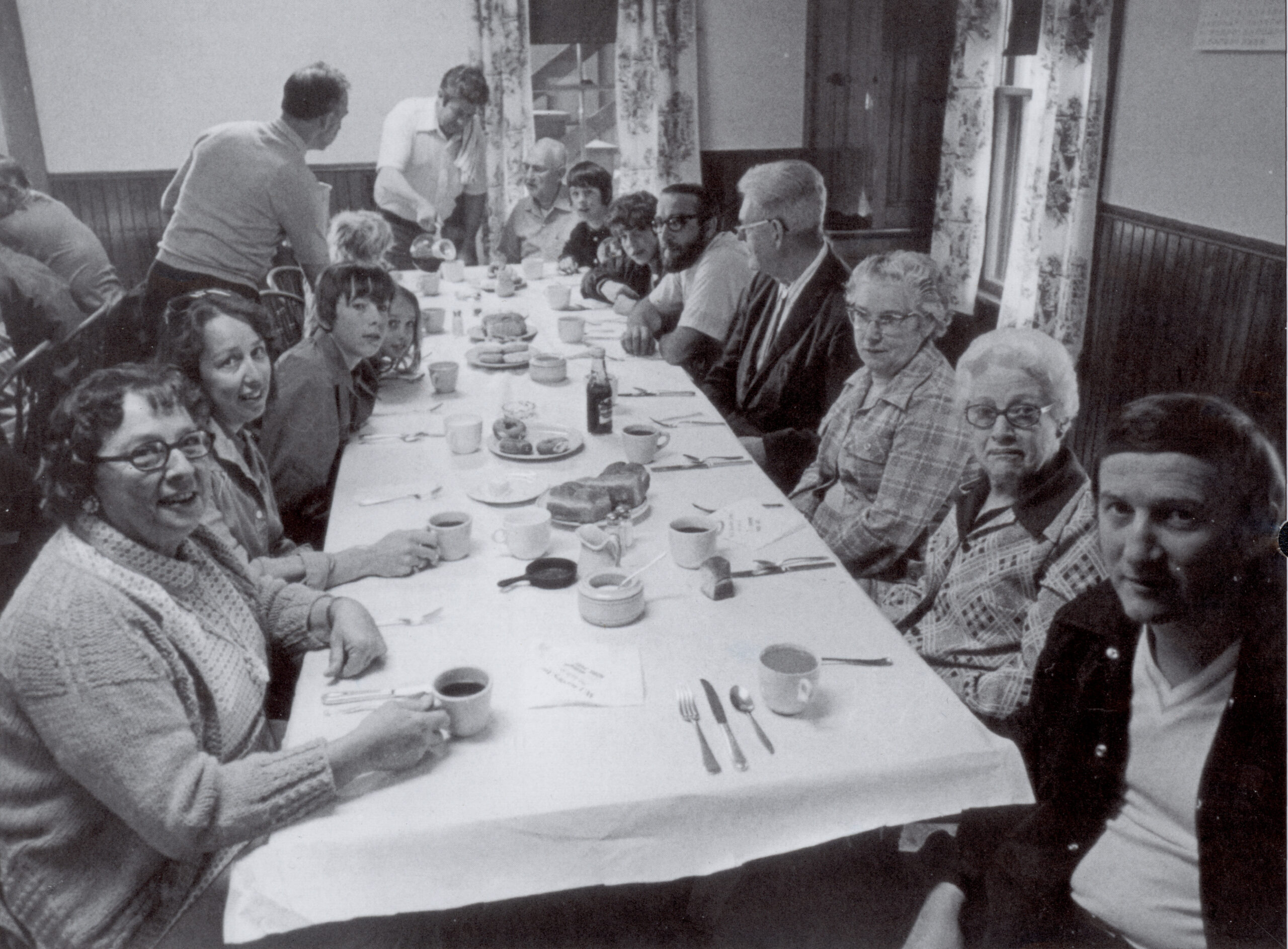
Kiwanis Fishermen’s Breakfast: A Wortman family affair at the annual Kiwanis Fishermen’s Breakfast, May 1976. Seated around the table are Mary Wortman, Isa Wortman Squiers, Michael Squiers, Tatia Squiers, Joel Wortman, Llewellyn Wortman, Jerry Squiers, Roland Wortman Jr., Roland Wortman Sr., Gwenyth Smith, Mary Smith, Ruby Wortman, and Bill Squiers. Two dollars, bacon and eggs, baked beans, rolls, donuts and coffee — doors open at 4 a.m. Many of the faces around this table are gone now, but the morning they shared is worth remembering.
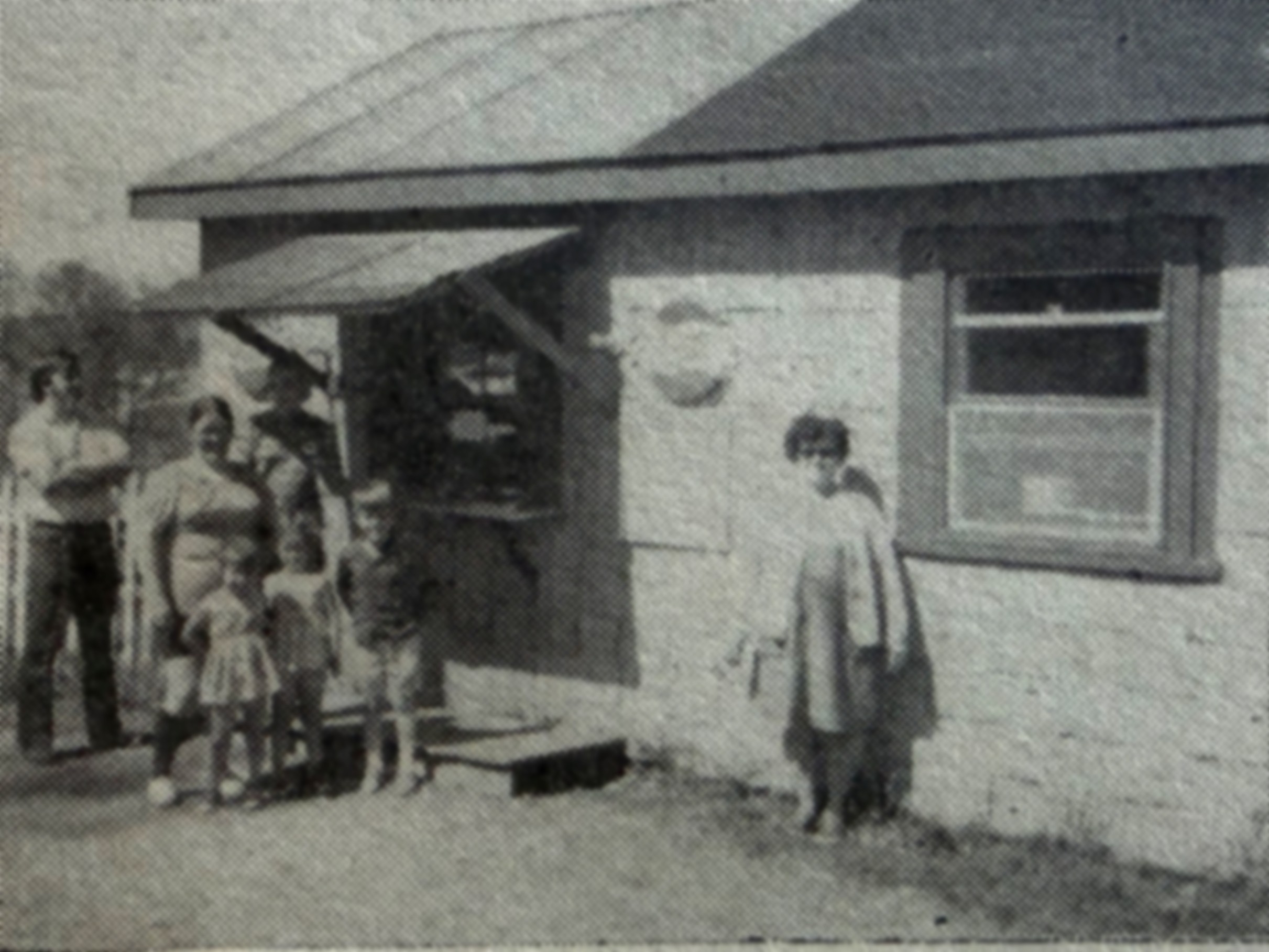
Lena’s Lunch: Lena Gravelle outside her newly refurbished lunch spot on North Main Street, 1971. Before it was Lena’s it was Ken’s Dog House. By 1976 it had become the Blind Munch. The building is gone, but a lot of people still remember the late hours and great food.
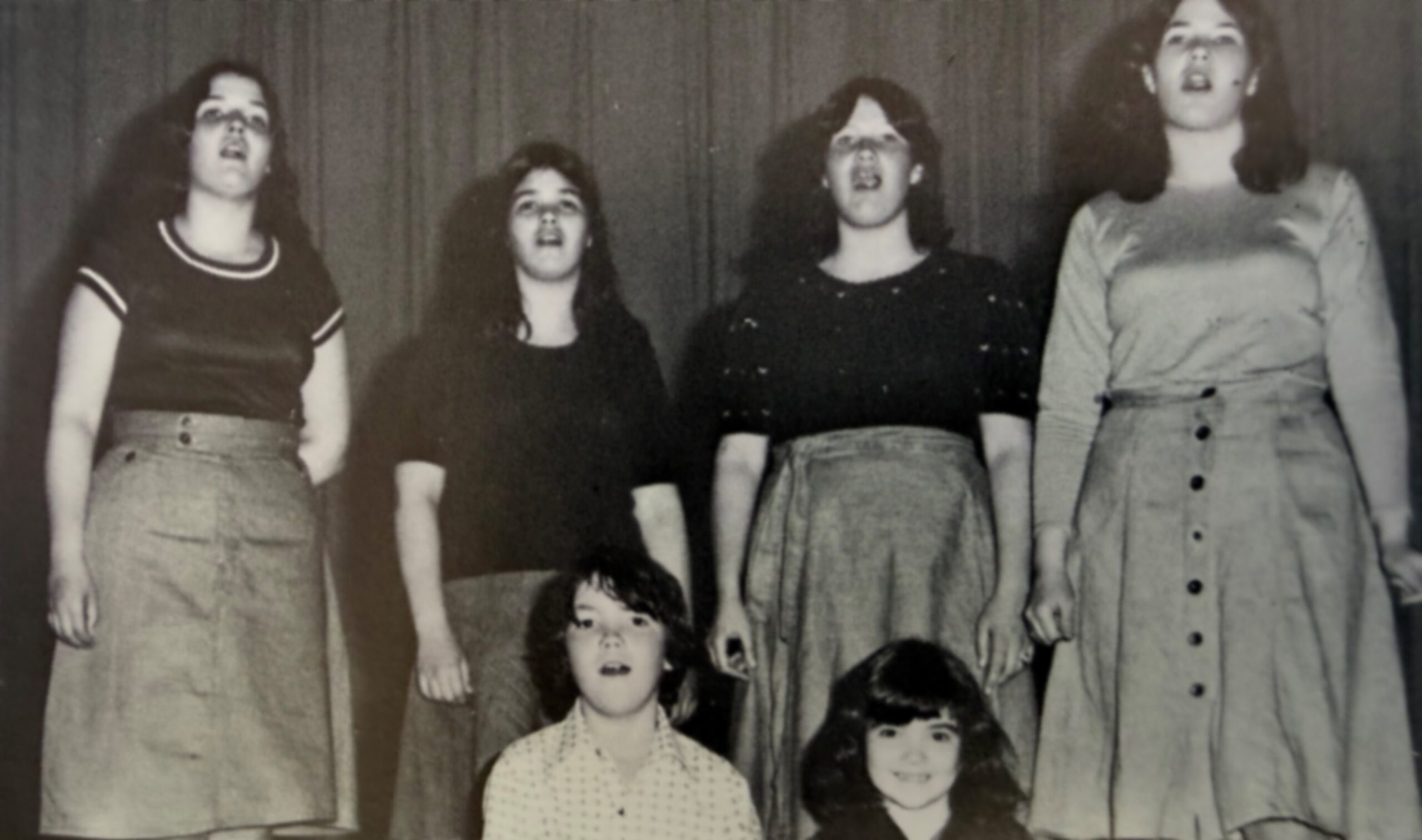
The Poulson Family Singers: The Poulson family performing at the Rollicky-Pollicky School Fair Variety Show, May 1976. Chris Poulson, second from right in the back row, is still singing today — performing weekly at venues across central Maine and returning to Greenville each year for a few engagements. Some voices stay with a community for a long time.
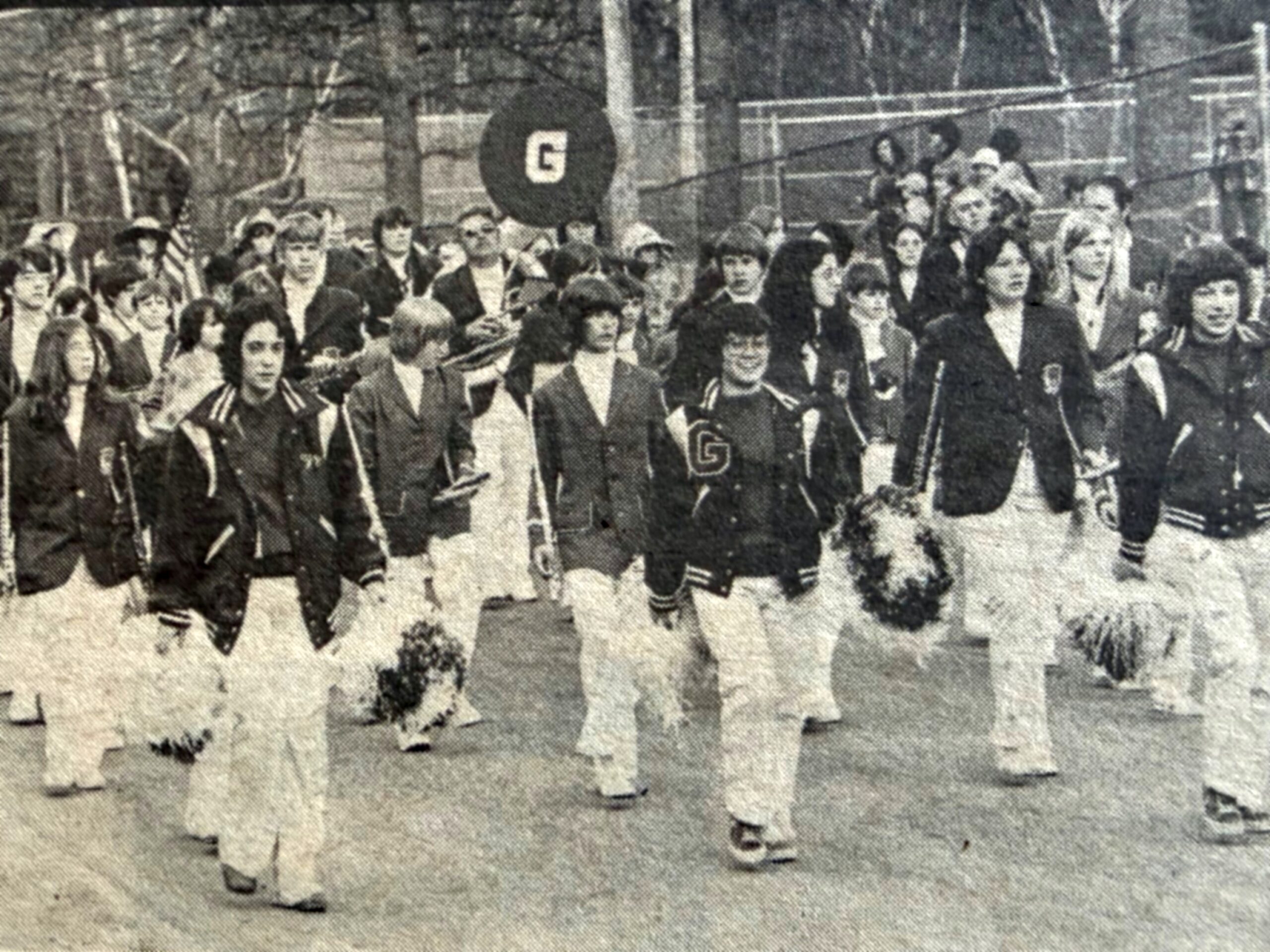
Rollicky-Pollicky Parade: GHS students marching up Pritham Avenue during the Rollicky-Pollicky School Fair parade, May 1976. Letter jackets, pom poms, and a lot of familiar faces. Those were good days.
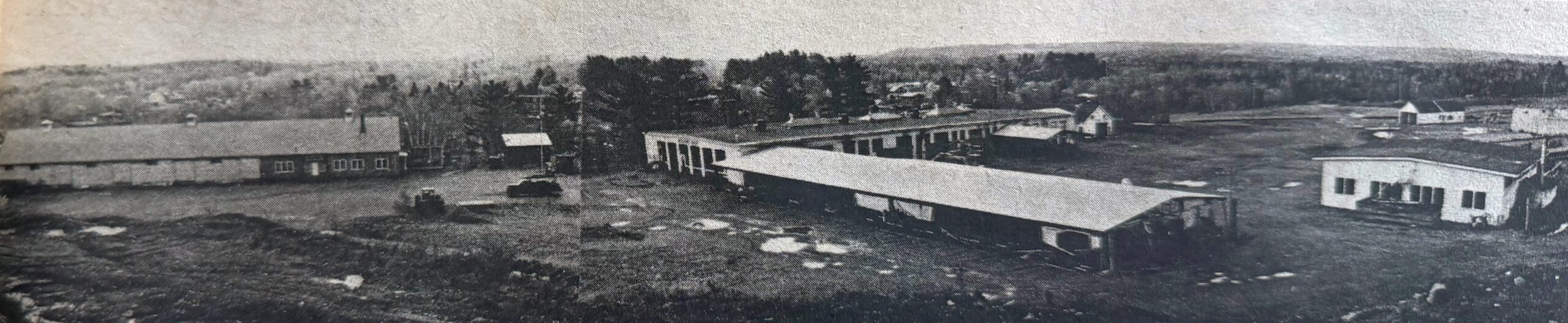
Beaudry Lumber: The Beaudry Lumber complex at Greenville Junction, as it looked in the mid-1970s. The long building on the far left — the former Great Northern storehouse — is the only one still standing today. It’s now Woody’s Bar. Everything else in this picture is gone. (Click photo for larger image)